Blood, Battles, and Your Baking Spice: How Nutmeg Started Wars and Ended Up in Your Kitchen Drawer
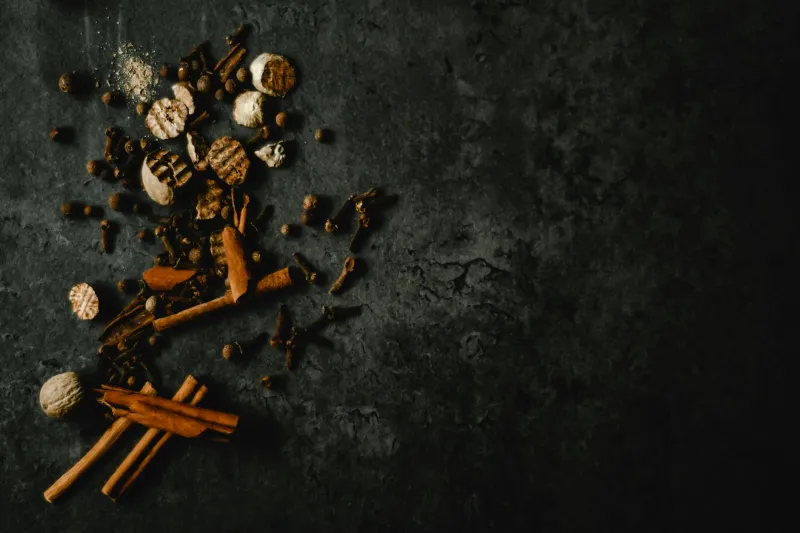
There's probably a small jar of nutmeg sitting in your spice rack right now, gathering dust between the oregano and the paprika. You might use it once or twice a year — a pinch in your eggnog, a dash on your pumpkin pie. It seems harmless enough, this mild brown powder that adds a gentle warmth to holiday desserts.
What you're looking at is the domesticated descendant of the world's most blood-soaked spice.
For nearly 400 years, nutmeg was worth more than gold. Men died for it. Empires rose and fell over it. Entire populations were wiped out to control it. The tiny seed in your kitchen drawer has more blood on its hands than most weapons of war.
The Monopoly Islands
Nutmeg comes from the seed of Myristica fragrans, a tree that, until the 18th century, grew wild in only one place on Earth: the Banda Islands, a tiny archipelago in what is now Indonesia. Ten volcanic specks in the ocean, so small you could walk across the largest island in an hour.
These islands were the Fort Knox of the spice world. For centuries, Arab and Chinese traders had controlled the nutmeg trade, keeping the source location secret and selling the precious seeds for astronomical prices in European markets. A single pound of nutmeg in 16th-century London cost the equivalent of seven fat oxen.
When Portuguese explorer Afonso de Albuquerque finally located the Banda Islands in 1511, he found a tropical paradise inhabited by about 15,000 people who had been quietly getting rich selling nutmeg and mace (nutmeg's sister spice, made from the same seed's outer coating) to visiting traders.
That peaceful existence was about to end.
The Dutch Solution
The Portuguese were followed by the Spanish, then the English, and finally the Dutch. Each European power wanted to control the nutmeg trade, but the Dutch East India Company approached the problem with characteristic efficiency: they decided to own everything.
In 1621, Dutch forces invaded the Banda Islands and implemented what we would now recognize as genocide. They killed or enslaved nearly the entire native population — estimates suggest only about 1,000 Bandanese survived out of the original 15,000. The Dutch then imported slave labor to work the nutmeg plantations under strict company control.
The strategy was brutally simple: maintain absolute monopoly by eliminating anyone who might compete. The Dutch chopped down nutmeg trees on neighboring islands, executed anyone caught smuggling seeds, and even coated exported nutmeg with lime to prevent germination.
For nearly two centuries, this system worked. The Dutch East India Company became one of the richest corporations in human history, largely on the back of a spice that most people today use maybe twice a year.
The Connecticut Connection
Here's where the story gets weird for Americans. During the colonial period, nutmeg was so valuable that Connecticut traders became famous for selling fake nutmeg — wooden replicas carved to look like the real thing. These "Connecticut nutmegs" were so notorious that Connecticut became known as "The Nutmeg State," a nickname that persists today.
The irony is that most of these "fake nutmeg" stories were probably exaggerated or invented entirely by rival merchants trying to damage Connecticut's reputation. But the nickname stuck, and today Connecticut residents are still called "Nutmeggers," honoring a tradition of spice fraud that may never have actually existed.
The Great Heist
The Dutch monopoly finally cracked thanks to one of history's most successful acts of botanical espionage. In 1770, a French administrator named Pierre Poivre (yes, his last name means "pepper") managed to smuggle nutmeg seedlings out of the Dutch-controlled islands.
Poivre planted the stolen trees in French colonies in Mauritius and later in Grenada and other Caribbean islands. The British, not to be outdone, established their own nutmeg plantations in Penang and other Asian colonies. Within a few decades, the Dutch monopoly was broken, and nutmeg prices began their long slide toward affordability.
The American Revolution's Secret Ingredient
By the time of the American Revolution, nutmeg had become accessible enough that it appeared in colonial cookbooks and household inventories. Martha Washington's recipe collection includes multiple dishes calling for nutmeg, and archaeological excavations of Revolutionary War-era sites regularly turn up nutmeg graters among kitchen artifacts.
Nutmeg's association with wealth and sophistication made it a popular ingredient among Americans trying to establish their cultural independence from Britain. If you could afford to put nutmeg in your apple pie, you were demonstrating that America could access the same luxury goods that European aristocrats enjoyed.
The Modern Aftermath
Today, Grenada produces about 40% of the world's nutmeg, a legacy of those smuggled French seedlings. The spice that once required armies to control now grows on small family farms and sells for about $20 per pound — expensive for a spice, but nothing compared to its historical value.
The transformation of nutmeg from blood-soaked commodity to baking ingredient reflects a broader pattern in food history: yesterday's luxury becomes today's commonplace ingredient. Pepper, cinnamon, vanilla, and sugar all followed similar paths from precious to pedestrian.
The Spice Rack Revolution
The nutmeg in your kitchen drawer represents one of capitalism's strangest victories. The Dutch East India Company's monopoly was so successful that it eventually destroyed itself — by making nutmeg valuable enough to steal, they guaranteed that someone would eventually steal it.
The next time you reach for that little jar of nutmeg, remember that you're handling the domesticated descendant of history's most dangerous spice. The powder that gently flavors your holiday cookies once toppled governments, funded genocides, and shaped the global economy.
In a way, nutmeg's journey from weapon of empire to kitchen staple tells the story of globalization itself: how products move from scarcity to abundance, from tools of power to everyday conveniences. The spice that once started wars now sits peacefully in millions of American kitchens, waiting to add a touch of warmth to someone's weekend baking project.
That's either the ultimate triumph of free markets or the strangest anticlimax in culinary history. Probably both.