The Cheese That Isn't Cheese: How a Canadian Inventor's Patent Became America's Most Mocked Food
The Cheese That Isn't Cheese: How a Canadian Inventor's Patent Became America's Most Mocked Food
American cheese is the Nickelback of dairy products. Everyone makes fun of it, yet somehow it's everywhere. It's the cheese equivalent of a guilty pleasure that nobody admits to enjoying, despite the fact that Americans consume more processed cheese than any other variety.
This orange-yellow rectangle of controversy didn't happen by accident. American cheese was engineered to be exactly what it is: a shelf-stable, meltable, consistent product that could survive industrial food systems and mass distribution. The fact that it barely resembles traditional cheese wasn't a flaw in the design — it was the feature.
The Swiss Problem Solver
The story begins in 1916 with James Lewis Kraft, a Canadian-born entrepreneur who had moved to Chicago and started a wholesale cheese business. Kraft was dealing with a problem that plagued every cheese merchant of his era: spoilage. Traditional cheese had a frustratingly short shelf life, especially when shipped across the vast distances of early 20th-century America.
Kraft's solution was radical for its time. Instead of accepting cheese's natural limitations, he decided to rebuild it from the ground up. Working with a team of food chemists, Kraft developed a process that involved melting natural cheese, adding emulsifying agents, and then reforming it into a product that could last for months without refrigeration.
On June 23, 1916, Kraft received U.S. Patent No. 1,186,524 for "Process of Sterilizing Cheese and an Improved Product Produced by Such Process." This wasn't just a new type of cheese — it was a completely different approach to what cheese could be.
The Military Connection
Kraft's timing was perfect. World War I created an enormous demand for shelf-stable foods that could be shipped to troops overseas. The U.S. military became one of Kraft's biggest customers, ordering millions of pounds of processed cheese for soldiers' rations.
This military connection shaped processed cheese's development in crucial ways. Army requirements meant the cheese had to be uniform (no variation between batches), durable (able to survive rough handling and extreme temperatures), and familiar (acceptable to soldiers from different regional food traditions).
The orange color that defines American cheese today? That was also a practical military decision. Natural cheese varies in color depending on the season and the cows' diet, but military procurement required visual consistency. Kraft added annatto, a natural coloring agent, to ensure every batch looked identical.
The Post-War Boom
When American soldiers returned from the war, they brought their taste for processed cheese with them. Kraft had spent four years perfecting a product for military logistics, and suddenly found themselves with a civilian market that was already familiar with their cheese.
The timing coincided perfectly with America's suburbanization boom. Processed cheese was ideal for the new American lifestyle: families moving to suburbs with limited shopping options, working mothers who needed convenient meal solutions, and a growing culture of casual entertaining.
Kraft Singles, introduced in 1950, took the concept even further. Individual wrapped slices eliminated the guesswork of portion control and made sandwiches foolproof. Each slice was engineered to melt at the exact temperature of a grilled cheese sandwich.
The Science of Fake
What makes American cheese so different from "real" cheese isn't mystery ingredients — it's process engineering. Traditional cheese is essentially controlled spoilage: milk proteins coagulate and age over time, developing complex flavors and textures.
Processed cheese reverses this process. Kraft's method takes aged natural cheeses (usually cheddar and colby), melts them down, and adds emulsifying salts that prevent the proteins and fats from separating. The result is a product with the melting properties of young cheese but the flavor stability of processed food.
The emulsifying agents — typically sodium phosphate or sodium citrate — are what give American cheese its characteristic smooth melt. Traditional cheese can become stringy or greasy when heated, but processed cheese melts into a uniform sauce every time.
The Authenticity Wars
As food culture became more sophisticated in the 1960s and 70s, American cheese found itself caught in America's growing authenticity obsession. Food writers and culinary experts began dismissing processed cheese as "fake" or "plastic," comparing it unfavorably to imported European varieties.
This criticism missed the point entirely. American cheese was never trying to compete with aged cheddar or imported Gruyère. It was solving different problems: consistency, shelf life, and meltability. Criticizing American cheese for not tasting like traditional cheese is like criticizing a screwdriver for not being a good hammer.
The Internet Pile-On
The rise of food social media in the 2000s turned American cheese mockery into a full-contact sport. Food bloggers and Instagram influencers built followings by dunking on processed cheese, often using phrases like "plastic cheese" or "cheese product" as punchlines.
Ironically, this online ridicule coincided with American cheese's continued dominance in actual consumption. While food influencers were posting artisanal grilled cheese sandwiches made with aged Vermont cheddar, most Americans were still buying Kraft Singles for their kids' school lunches.
The Unexpected Defenders
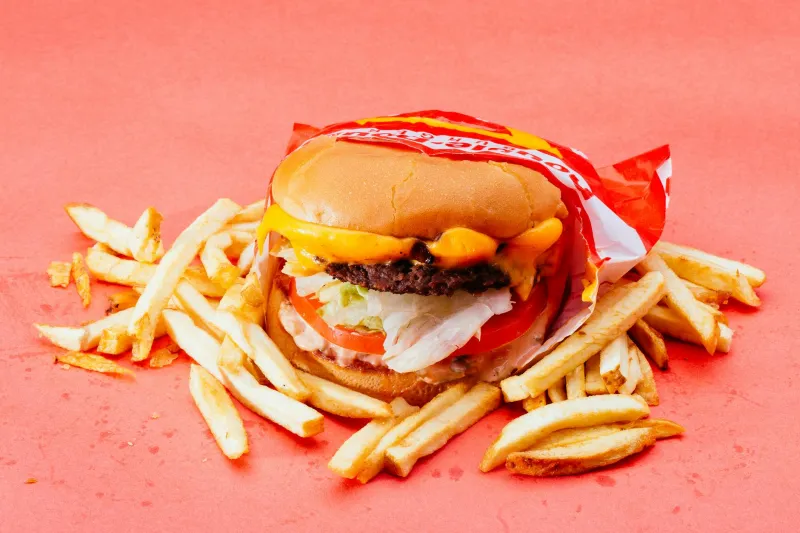
Recently, some high-end chefs have begun defending American cheese, arguing that its unique properties make it irreplaceable in certain applications. The same smooth melting characteristics that food snobs mock make American cheese essential for perfect burgers, grilled cheese sandwiches, and mac and cheese.
Chef Daniel Boulud, owner of multiple Michelin-starred restaurants, has publicly stated that American cheese makes the best cheeseburgers. His reasoning? Traditional cheese either doesn't melt properly or overwhelms the beef's flavor. American cheese provides the creamy texture and mild flavor that complements rather than competes.
The Engineering Triumph
Viewed from an engineering perspective, American cheese is actually a remarkable achievement. Kraft's team created a dairy product that solved multiple problems simultaneously: shelf stability, portion control, consistent melting, and mass production scalability.
The fact that it doesn't taste like traditional cheese is irrelevant — it was never supposed to. American cheese is optimized for different criteria: convenience, consistency, and functionality in industrial food systems.
The Cultural Mirror
American cheese's reputation reveals something interesting about American food culture's relationship with authenticity and convenience. We simultaneously demand traditional flavors and modern convenience, then criticize food manufacturers for trying to deliver both.
The same culture that embraces craft beer and artisanal bread also consumes more processed cheese than any other country. American cheese represents the practical side of American food culture — the part that prioritizes function over form, convenience over authenticity.
In the end, American cheese succeeded so completely at its intended purpose that we forgot what that purpose was. It's not trying to be the best cheese; it's trying to be the most useful cheese. And by that measure, the orange rectangle that everyone loves to hate might be the most successful food product in American history.
So the next time someone mocks American cheese for being "fake," remember that its artificiality was the entire point. It's not a failed attempt at making real cheese — it's a successful attempt at making something better suited for modern American life. Whether that's worth celebrating or mourning probably depends on how you feel about modern American life itself.