The Paper Parasol That Saved a Restaurant — And Accidentally Created America's Escape Fantasy
When Cheap Drinks Needed Expensive Dreams
In the depths of the Great Depression, Harry Yee faced a problem that would be familiar to any struggling restaurateur today: how do you make customers feel like they're getting something special when your margins are razor-thin and your ingredients are bottom-shelf?
Yee's Honolulu restaurant was hemorrhaging money in 1936. Tourism to Hawaii had collapsed, locals had little disposable income, and his competition was serving essentially identical drinks at identical prices. His rum punches and fruit cocktails tasted fine, but they looked like exactly what they were—cheap alcohol mixed with cheaper juice, served in ordinary glasses.
Then Yee discovered a box of decorative paper parasols that had been left behind by a party supply vendor. Instead of throwing them away, he stuck one in a drink and served it to a customer. That single paper umbrella would accidentally launch one of America's most enduring restaurant trends and create an entire cultural movement around tropical escapism.
The Psychology of Perceived Value
What Yee had stumbled upon was a fundamental principle of hospitality psychology: presentation can dramatically alter perceived value without changing actual cost. The paper umbrella cost him less than a penny, but it transformed a 25-cent rum punch into what felt like an exotic tropical experience.
Customers began requesting "that drink with the little umbrella." They photographed their cocktails—unusual behavior in an era before Instagram, when taking pictures in restaurants was considered odd. Most importantly, they started bringing friends specifically to experience these "special" drinks that looked unlike anything available elsewhere.
The parasol created a sense of occasion that justified higher prices without actually improving the alcohol or ingredients. Yee realized he could charge 50 cents for the same drink simply by adding a paper prop that cost almost nothing.
How One Umbrella Became a Movement
Word of Yee's decorative drinks spread through Hawaii's small hospitality community. Other restaurant owners began importing their own paper parasols, but they faced a supply problem—the umbrellas were manufactured primarily in Japan and China for actual rain protection, not decoration.
American party supply companies recognized the opportunity and began producing smaller, more colorful versions specifically for drinks. By 1940, paper cocktail umbrellas were available in dozens of colors and patterns, each designed to enhance the visual appeal of tropical-themed beverages.
The timing proved perfect for what would become the tiki culture explosion. As World War II ended and Americans had money to spend again, the cocktail umbrella provided an affordable way for mainland restaurants to evoke tropical paradise. You couldn't travel to Hawaii, but you could drink something that looked like it came from there.
The Accidental Architecture of Escape
The cocktail umbrella's success revealed something profound about American psychology in the mid-20th century. Post-war prosperity had created a middle class with disposable income but limited vacation options. International travel remained expensive and complicated, but a paper parasol could transform any bar into an exotic destination.
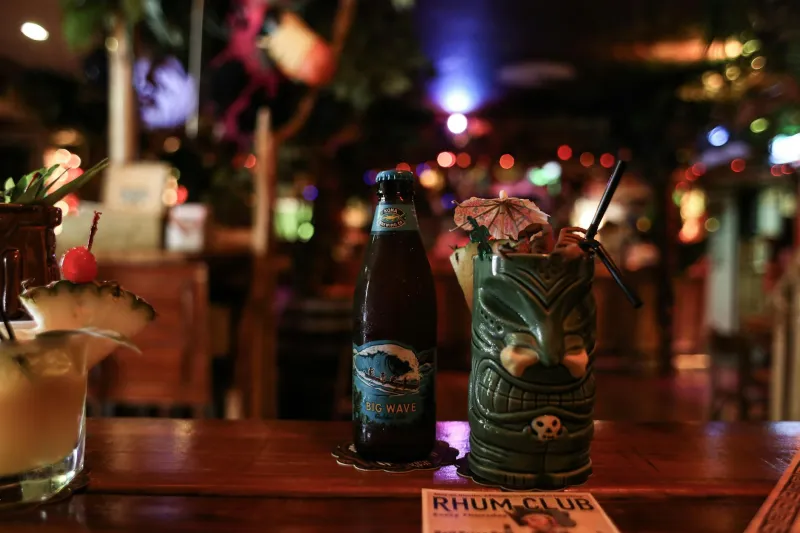
Restaurant designers began building entire environments around this paper prop. Tiki bars emerged across the mainland United States, featuring bamboo decor, carved totems, and elaborate cocktail presentations centered around the humble paper umbrella. The aesthetic spread from restaurants to home parties, vacation resorts, and eventually became shorthand for leisure and escape.
What started as a desperate cost-saving measure had accidentally created a visual language for tropical fantasy that defined American leisure culture for decades.
The Digital Revival of Paper Props
After falling out of favor during the craft cocktail movement of the 1990s and 2000s—when serious bartenders dismissed cocktail umbrellas as tacky tourist nonsense—the paper parasol is experiencing an unexpected renaissance in the social media age.
Instagram and TikTok have rediscovered the cocktail umbrella's visual appeal. The same prop that once made Depression-era drinks feel special now makes contemporary cocktails more photogenic. High-end bars that once scorned paper umbrellas are quietly reintroducing them, though they're careful to frame them as "vintage" or "retro" rather than admitting they're using the same marketing psychology that worked in 1936.
Craft cocktail bars now spend considerable money sourcing "authentic" vintage-style paper parasols, often paying more for a single umbrella than Yee's entire original supply cost. The irony isn't lost on hospitality historians: what began as the cheapest possible way to enhance drink presentation has become an expensive specialty item.
The Enduring Power of Simple Theater
The cocktail umbrella's century-long journey from desperate marketing gimmick to cultural icon reveals something fundamental about restaurant psychology. Customers don't just buy food and drinks—they buy experiences, stories, and feelings.
Yee's paper parasol succeeded because it provided visual evidence that something special was happening. The umbrella didn't change the drink's taste, but it changed how customers felt about consuming it. That emotional transformation proved more valuable than any improvement to ingredients or preparation.
Modern restaurants continue using variations of Yee's strategy. Dry ice in cocktails, elaborate garnishes, unusual serving vessels, and Instagram-worthy presentations all serve the same function as that original paper parasol—they create theater around consumption.
From Survival to Symbol
Today's cocktail umbrellas carry the DNA of their Depression-era origins. They remain fundamentally about making ordinary drinks feel extraordinary, transforming everyday experiences into something worth celebrating and sharing.
The next time you see a paper parasol in a drink—whether at a beachside tiki bar or an upscale cocktail lounge—remember that you're witnessing the legacy of a broke restaurant owner who figured out how to sell dreams for the price of a penny's worth of paper.
That tiny umbrella represents more than decoration. It's a testament to the power of imagination in hospitality, proof that sometimes the smallest props can create the biggest escapes.