The Number Heinz Made Up — And Why It's Still on Every Ketchup Bottle
The Number Heinz Made Up — And Why It's Still on Every Ketchup Bottle
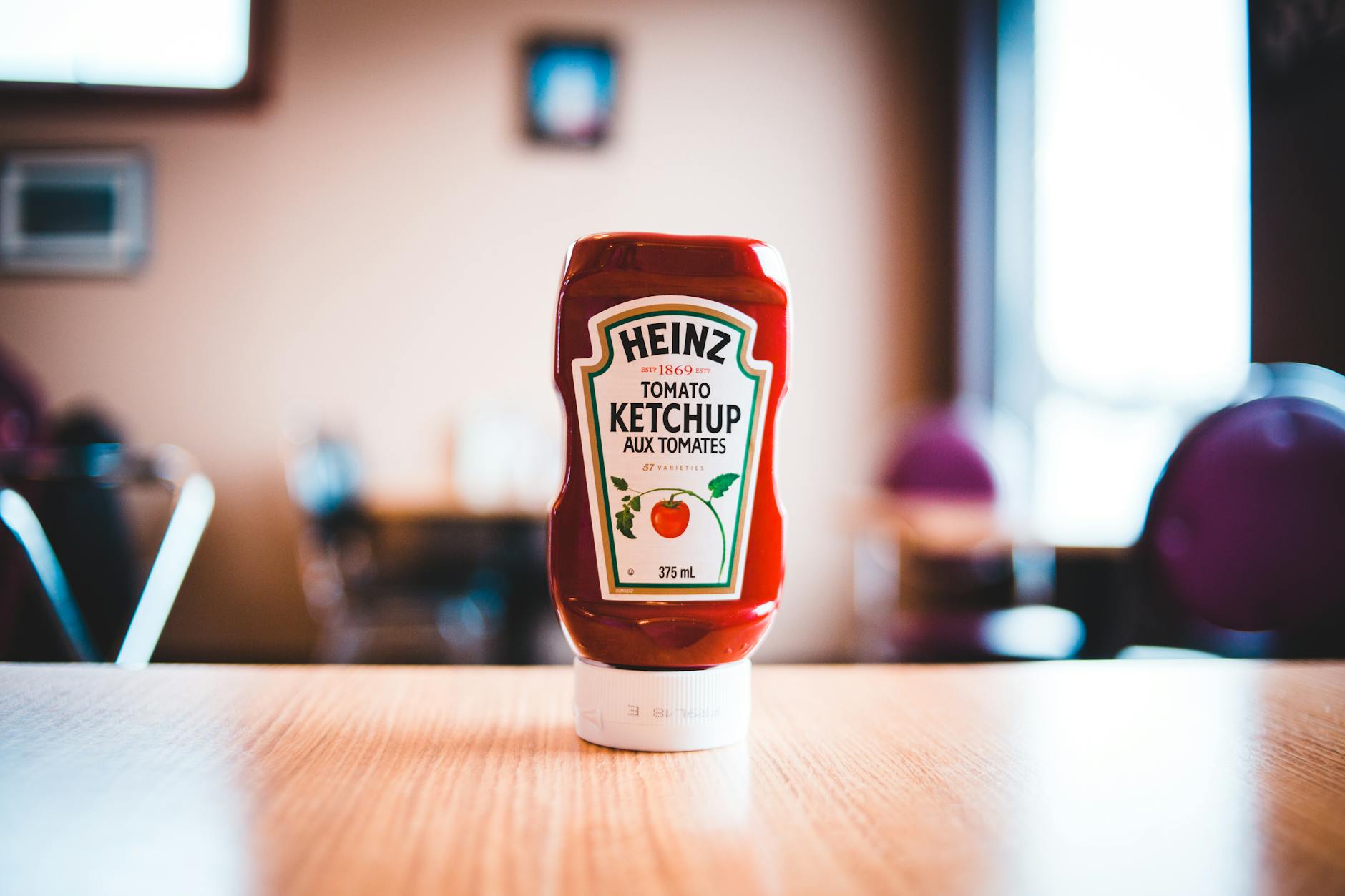
Pick up a bottle of Heinz ketchup from any diner counter, any grocery store shelf, or any backyard cookout cooler in America, and you'll see it: 57 Varieties. It's printed right there on the label, bold and confident, like it means something precise.
It doesn't. Not really.
The number 57 is, by Henry Heinz's own admission, essentially arbitrary — a figure he pulled from a flash of inspiration on a New York City elevated train in 1896. And yet it has outlasted empires, survived two world wars, and persisted on Heinz labels long after the company's actual product count climbed into the hundreds. This is the strange, surprisingly human story behind one of America's most iconic food labels.
Before the Number, There Was the Man
Henry John Heinz wasn't an accidental entrepreneur. He was a relentless one. Born in Pittsburgh in 1844 to German immigrant parents, he started selling bottled horseradish from his mother's garden as a teenager, eventually founding what would become the H.J. Heinz Company in 1876. By the 1890s, the company was producing a dizzying range of bottled condiments, pickles, sauces, and preserves — a product line that was genuinely difficult to communicate to consumers at a time when most people still bought food loose from barrels and bins.
Heinz understood something that many of his competitors didn't: in a crowded market, a number feels like proof. A number says we have done the work. A number is memorable.
He just needed the right one.
The Train Ride That Changed a Label
The story goes like this. Sometime in 1896, Henry Heinz was riding an elevated train through New York City when he spotted an advertisement for a shoe company boasting "21 styles." The specificity of it caught his eye. Not many styles or dozens of styles — twenty-one. It felt real. It felt curated.
Heinz was immediately struck by the idea of applying the same logic to his own products. He started mentally counting his company's offerings right there on the train. By some accounts, the actual number of Heinz products at the time was already well over 60. But something about 57 appealed to him on an almost superstitious level. He later said he simply liked the way it looked and sounded. Five and seven were his lucky numbers.
So 57 it was.
Within a year, "57 Varieties" was appearing on Heinz labels, in newspaper advertisements, and on the company's iconic pickle-shaped pins, which salesmen handed out by the thousands. The slogan was a hit almost immediately — not because consumers were counting products, but because the specificity made it feel trustworthy. Fifty-seven varieties sounds like a company that has really thought things through.
A Number That Refused to Update
Here's where the story gets genuinely strange. By the early 1900s, Heinz was already producing far more than 57 products. By the time the slogan was firmly embedded in American culture, the company had hundreds of items in its catalog. At various points in its history, Heinz offered over 1,300 products worldwide.
The number never changed.
Heinz himself was asked about the discrepancy more than once. His answer was essentially: it doesn't matter. The number wasn't meant to be a count — it was meant to be a feeling. And that feeling, he argued, was accuracy enough.
The company has more or less maintained that position ever since. In a 2023 acknowledgment that felt equal parts confession and celebration, Heinz officially declared that there is no real meaning behind 57 — and leaned into it as part of the brand's charm. The number, they suggested, is whatever you need it to be.
Why It Still Works
There's a lesson buried in this story that goes beyond ketchup. In the late 19th century, American consumers were being asked to trust bottled and packaged foods for the first time — products they couldn't smell, touch, or inspect before buying. Trust was the entire product. And Henry Heinz, almost instinctively, understood that a confident, specific number communicated exactly that.
Fifty-seven varieties said: we have this many things worth making. It implied quality through quantity, care through specificity. It was marketing as reassurance.
The fact that the number was made up on a train is almost beside the point. What matters is that it worked — and kept working, decade after decade, through changing tastes, changing labels, and a product line that eventually dwarfed the original claim by a factor of twenty.
The 57 You Never Noticed
There's one more detail worth knowing. See that narrow neck on a glass Heinz ketchup bottle? The spot where the label meets the glass, roughly two-thirds of the way up? That's where Heinz recommends you tap the bottle to get the ketchup flowing — and it's marked, almost invisibly, with the number 57.
Most people have been tapping the wrong spot their whole lives. The trick is right there on the label. It always has been.
Every plate has a story. Sometimes it's printed right in front of you — you just have to know where to look.