The Paper Napkin Started as Rich People's Flex — Then Fast Food Made It Democracy's Messiest Victory
When Wiping Your Face Was a Shared Experience
Picture this: you're at a restaurant in 1890, and you've just finished a messy meal. You reach for a napkin, but instead of grabbing a fresh one, you're handed the same cloth that the previous three diners used. Maybe it got a quick rinse between customers. Maybe it didn't.
This was dining reality for most Americans before the paper napkin revolution. Cloth napkins weren't personal items — they were communal property, passed from diner to diner like a baton in the world's least appetizing relay race.
The World's Fair Game Changer
The paper napkin made its American debut not in a humble diner, but at the 1904 World's Fair in St. Louis — the same expo that introduced Americans to ice cream cones and hamburgers. Japanese exhibitors showcased delicate paper napkins as examples of refined Eastern craftsmanship, positioning them as the sophisticated alternative to those questionable shared cloth squares.
American manufacturers took notice. Here was a product that solved the hygiene problem while screaming luxury. Early paper napkins weren't cheap — they cost significantly more than washing cloth ones, making them a status symbol for restaurants that wanted to signal cleanliness and modernity.
The Germ Theory Marketing Goldmine
By the 1910s, America was in the grip of germ theory paranoia. People were suddenly aware that invisible microbes could kill them, and shared dining linens became public enemy number one. Paper napkin manufacturers seized this moment like a perfectly timed marketing campaign.
Scott Paper Company, already dominating the toilet paper market, pivoted hard into disposable dining products. Their advertisements didn't focus on convenience — they hammered home fear. "Protect Your Family From Disease!" screamed the headlines, showing wholesome families recoiling from the horrors of communal cloth napkins.
Restaurants embraced paper napkins not just for the hygiene angle, but for the economics. No more laundry bills. No more replacing stained linens. No more angry customers complaining about mysterious spots on their napkins. It was a win-win-win situation.
World War II Changes Everything
The real transformation happened during World War II, when everything changed about how Americans ate. Rationing made cloth scarce, women entered the workforce in massive numbers, and the concept of quick, efficient dining became a patriotic necessity.
Paper napkins went from luxury item to wartime essential almost overnight. Factories that once produced fine stationery switched to churning out basic paper napkins for military mess halls and defense plant cafeterias. The product that once symbolized refinement became a symbol of American efficiency.
More importantly, an entire generation of Americans — both soldiers overseas and workers on the home front — got used to the idea that napkins should be disposable. When they returned to civilian life, the expectation stuck.
The Fast Food Revolution Seals the Deal
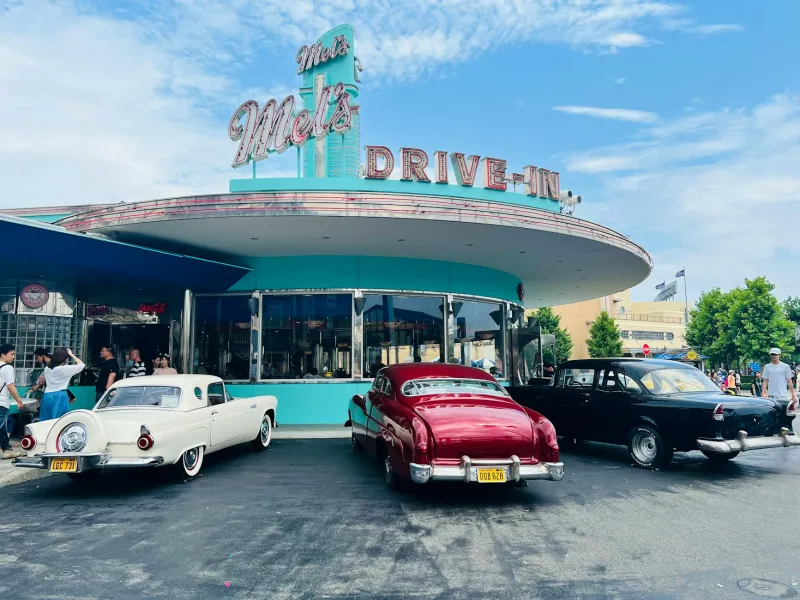
The 1950s brought drive-ins, burger joints, and the birth of fast food culture. For these new restaurants, paper napkins weren't just convenient — they were absolutely essential to the business model.
White Castle, McDonald's, and their competitors built their empires on speed and efficiency. Cloth napkins would have been suicide for these operations. Imagine trying to run a drive-through while collecting and washing linens from every customer.
Paper napkins became the unsung heroes of fast food. They absorbed the grease from french fries, cleaned ketchup off fingers, and most importantly, disappeared with the customer. No muss, no fuss, no laundry bills.
The Great American Napkin Standardization
By the 1960s, paper napkins had achieved something remarkable: they became so common that Americans stopped thinking about them entirely. The product that once required marketing campaigns about luxury and hygiene had become invisible infrastructure.
Restaurants started buying them in bulk, manufacturers focused on cost-cutting rather than quality, and the paper napkin settled into its role as the most taken-for-granted item on the American table. The fancy napkins with decorative edges gave way to basic squares designed for maximum absorbency at minimum cost.
From Luxury to Landfill
Today's paper napkin bears little resemblance to those delicate Japanese imports from 1904. Modern versions are engineered for efficiency — they're designed to soak up grease, survive brief contact with liquid, and decompose quickly after disposal.
Americans now use an estimated 2.4 billion pounds of paper napkins annually. We grab handfuls without thinking, stuff them in glove compartments, and toss them without ceremony. The luxury item that once signaled sophistication has become so mundane that we'd only notice if it wasn't there.
The Democratic Victory
The paper napkin's journey from world's fair novelty to fast food staple represents something uniquely American: the democratization of luxury. What started as a rich person's flex became available to anyone with fifty cents for a burger.
In restaurants across America, the paper napkin dispenser sits as a monument to convenience culture — a reminder of how quickly luxury can become necessity, and how the things we take for granted often have the wildest origin stories of all.