The Booth Was Built for Speed. Diners Had Other Plans.
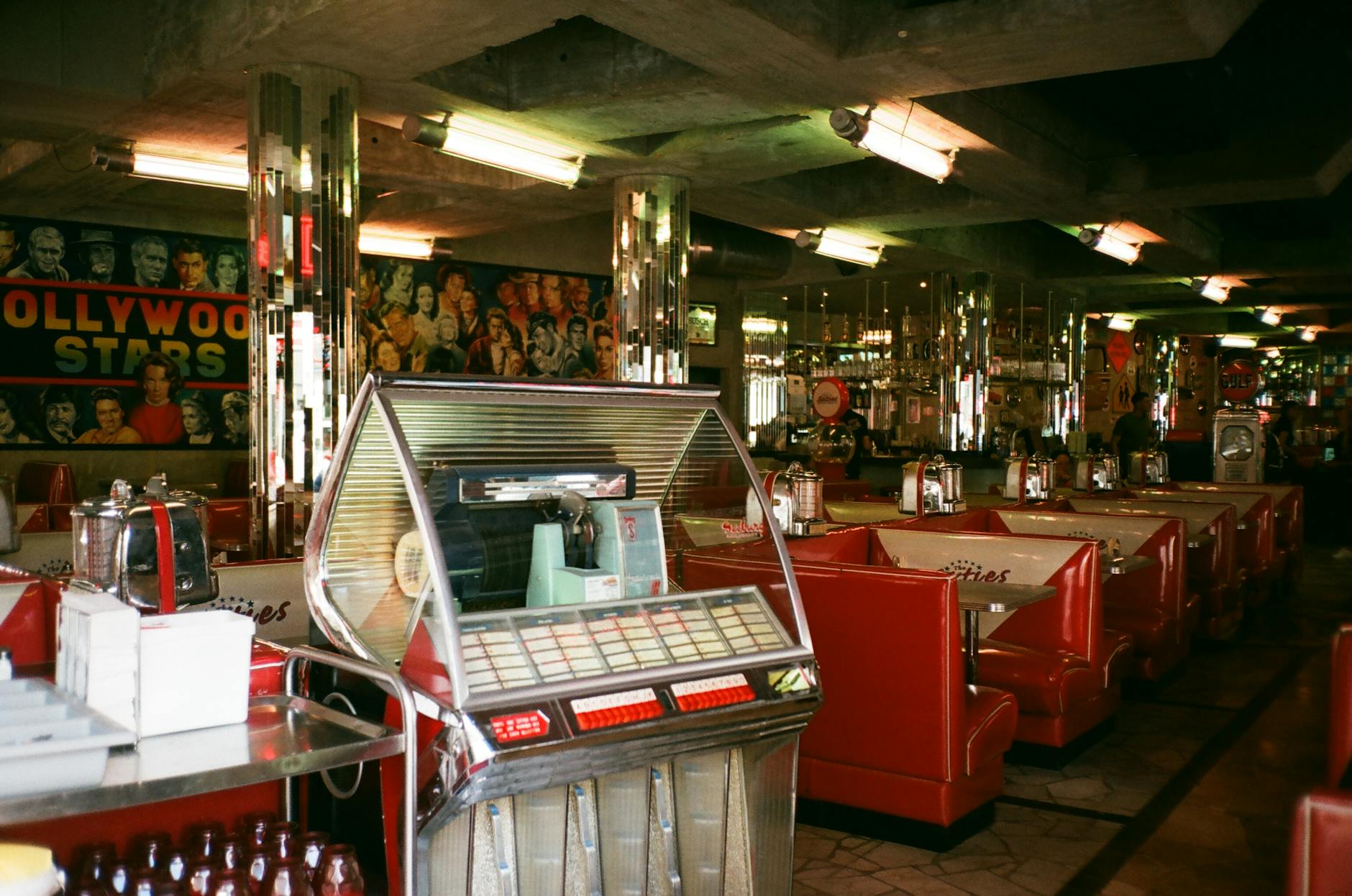
The Booth Was Built for Speed. Diners Had Other Plans.
There's something about sliding into a booth that just feels right. The high walls on either side, the little bubble of privacy, the sense that this corner of the restaurant belongs to you for a while. It's one of the most instinctively comfortable spots in American dining culture — which makes it all the more ironic that the booth was originally designed to do the exact opposite of make you comfortable.
It was built to get you out the door.
Efficiency, Not Coziness
In the late 1800s and early 1900s, American cities were growing fast. Factories were running full shifts. Workers needed to eat lunch quickly and get back on the floor. The lunch counter — a long strip of stools facing a serving counter — was the original answer to this problem. Efficient, no-frills, built for volume.
But as diners and early restaurants started competing for customers, operators began experimenting with seating arrangements that could squeeze more people into smaller footprints. The booth emerged as a natural evolution: fixed benches facing each other across a table, positioned along walls or dividers to maximize the number of seats per square foot.
The logic was straightforward. Booths didn't require chairs to be pulled out and pushed back in. They didn't need as much floor clearance. You could line them up along every wall, stack them two-deep in a narrow room, and fit significantly more customers into a space than traditional table-and-chair setups allowed. For diner owners trying to turn tables during a breakfast or lunch rush, the booth was a small piece of architectural genius.
The assumption was that the fixed, slightly rigid seating would keep people from getting too comfortable — that they'd eat, settle up, and move on.
The Backfire
It didn't work out that way.
What restaurant owners discovered, almost immediately, was that the booth created something they hadn't planned for: a sense of enclosure that made people feel like they had their own space. The high wooden backs blocked out the noise and movement of the rest of the dining room. Sitting across from someone in a booth felt more intimate than sitting at an open table. Conversations felt more private. People relaxed.
And relaxed people linger.
Studies on dining behavior have consistently shown that booth seating leads to longer stays than open table seating. The psychological effect is real — when people feel contained in a defined space, they feel less exposed and less rushed. The very design that was meant to streamline turnover ended up encouraging customers to order another cup of coffee, split a piece of pie, and stay a little longer.
For owners, this was a genuine problem. But by the time the pattern became clear, booths had already become a fixture — not just functionally, but culturally.
How the Booth Became an American Icon
Through the mid-20th century, the diner booth cemented itself as one of the defining images of American everyday life. It showed up in Edward Hopper paintings and Hollywood films. It was where teenagers gathered after school, where couples went on dates, where families sat after Sunday services. The booth wasn't just seating — it was a setting.
Part of what made it so resonant was precisely that sense of semi-privacy in a public space. You were out in the world, in a busy restaurant, surrounded by the sounds of a working kitchen and other people's conversations — but your booth was yours. It created a sense of belonging without isolation, which turned out to be exactly what people wanted from a dining experience.
Fast food chains picked up on this in the 1950s and 60s. McDonald's, Denny's, IHOP — they all incorporated booths into their layouts, reinforcing the association between booth seating and casual American comfort. Even as restaurant design evolved and open-plan dining became fashionable, the booth held its ground.
Still the Best Seat in the House
Today, booths appear in everything from greasy spoon diners to upscale American bistros. Interior designers actively use them to create intimacy and warmth in spaces that might otherwise feel cold or impersonal. Restaurants that want to signal comfort — that want customers to feel at home — almost always include booths in their layouts.
The irony is that the booth's greatest design flaw, from an operational standpoint, is now considered its greatest asset. People stay longer in booths. They order more. They come back because they associate that restaurant with how they felt sitting there.
A piece of furniture built to speed up the American lunch hour ended up slowing it down — and in doing so, quietly shaped what it means to feel welcome at a restaurant.
Not bad for a few planks of wood and a padded bench.