When Lettuce Started a Revolution: How Salad Bars Became America's First Food Democracy
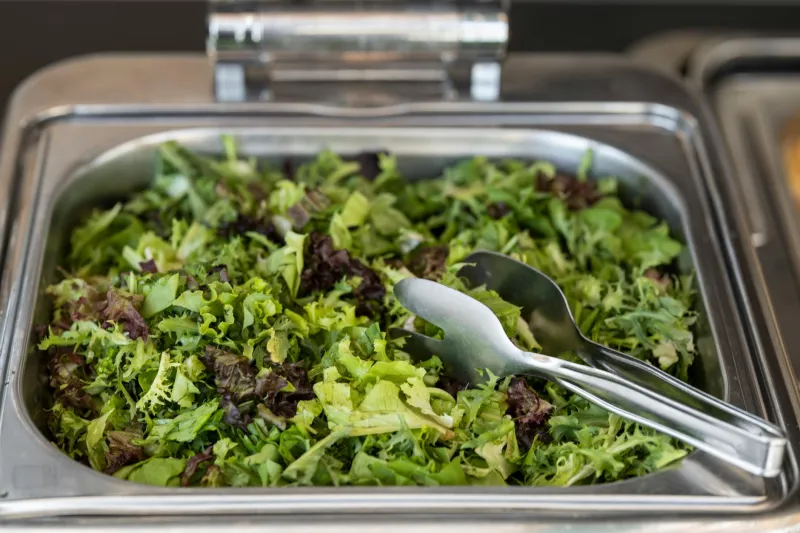
The Accidental Birth of Food Freedom
In 1960, Chuck Covert had a problem. His steakhouse in Springfield, Illinois was hemorrhaging money on labor costs, and customers kept sending back salads because the lettuce wasn't crisp enough or the dressing was wrong. His solution seemed almost absurd: why not let customers build their own salads?
Covert had no idea he was about to accidentally invent one of America's most democratic dining experiences. The "salad bar" — a term he coined himself — would go on to fundamentally change how Americans think about choice, control, and what it means to eat out.
From Steakhouse Gimmick to Cultural Movement
What happened next surprised everyone, including Covert. Customers didn't just tolerate making their own salads — they loved it. The ability to control every ingredient, every portion, every combination suddenly felt revolutionary in a dining landscape where you ate whatever the kitchen decided to serve you.
The timing couldn't have been better. The 1960s health movement was gaining steam, and Americans were becoming increasingly conscious about what they put in their bodies. The salad bar offered something restaurants had never provided before: complete transparency and personal control over your meal.
Restaurant owners quickly caught on. Here was a way to reduce labor costs, eliminate food waste from returned dishes, and actually make customers happier. By the early 1970s, salad bars were spreading across the country like wildfire.
The Golden Age of Self-Service
The 1970s and 80s marked the salad bar's golden era. Pizza Hut built an empire partly on their elaborate salad bars. Sizzler turned the concept into dinner theater, with sprawling buffets that made choosing your vegetables feel like an event. Even McDonald's experimented with salad bars in the late 80s.
But the salad bar represented something bigger than just lettuce and tomatoes. It was America's first widespread experiment with self-service dining that felt upscale rather than cheap. Unlike cafeterias, which carried working-class connotations, salad bars felt sophisticated. You weren't just getting your own food — you were curating your meal.
The psychology was brilliant. Customers felt they were getting more value because they controlled the portions. Restaurant owners saved money on labor and reduced waste. Everyone won.
The Great Decline
Then came the 1990s, and everything changed. Food safety concerns started mounting as health departments struggled to regulate self-service food stations. High-profile food poisoning outbreaks made customers wary of communal serving utensils and sneeze guards that didn't seem quite protective enough.
The rise of fast-casual dining also hurt the salad bar's appeal. Why build your own salad when Chipotle or Subway would customize one for you, with the added safety of professional food handling? The novelty of choice had worn off, replaced by the convenience of having someone else make your choices for you.
By the 2000s, most major chains had quietly retired their salad bars. Pizza Hut phased theirs out. Sizzler, once synonymous with the salad bar experience, filed for bankruptcy. The great experiment in food democracy seemed to be over.
The Quiet Comeback
But something interesting has been happening in the last few years. High-end grocery stores like Whole Foods have invested heavily in elaborate salad bars. Upscale restaurants are bringing back "composed salad stations" — essentially salad bars with better marketing. Even some corporate cafeterias are rediscovering the format.
The reasons for the comeback reveal how much American dining culture has evolved. Today's salad bar revival isn't about cost-cutting or novelty — it's about customization and dietary accommodation. In an era of gluten-free, keto, vegan, and paleo diets, the salad bar's original promise of complete control over your meal feels relevant again.
Why It Mattered Then, Why It Matters Now
Looking back, Chuck Covert's simple cost-cutting measure accidentally tapped into something fundamental about American dining culture. We wanted choice. We wanted control. We wanted to feel like active participants in our meals rather than passive recipients.
The salad bar taught us that eating out didn't have to mean surrendering all agency over our food. It was a small revolution disguised as a lunch option, and its influence can be seen in every customizable meal we order today.
Today's comeback isn't just nostalgia — it's recognition that sometimes the old solutions work better than we remembered. In a world of endless food delivery apps and pre-made everything, there's something refreshingly honest about walking up to a row of fresh vegetables and building your own meal, one choice at a time.
The salad bar may have started as a practical solution to a business problem, but it accidentally created something more valuable: America's first taste of food democracy. And democracy, it turns out, never really goes out of style.