The Tiny Seed That Toppled Empires and Ended Up Forgotten in Your Spice Rack
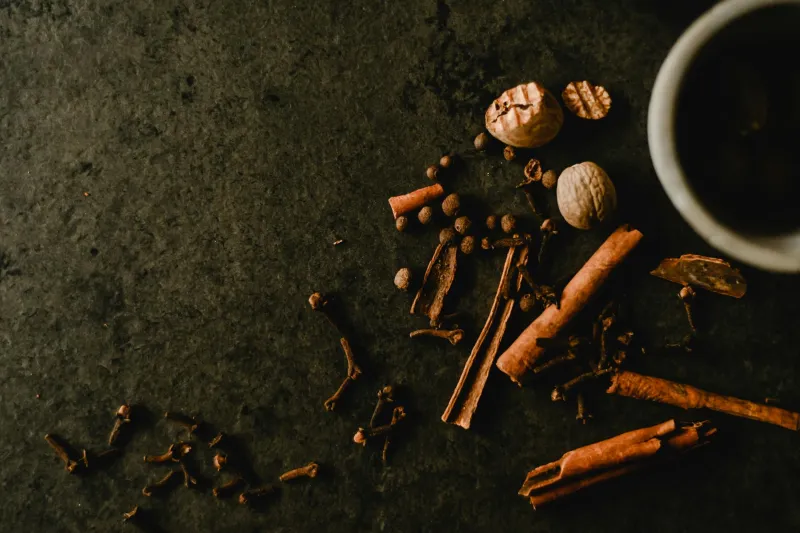
The Spice Worth Dying For
In your kitchen right now, probably tucked behind the oregano and gathering dust, sits a small jar of ground nutmeg. You might use it twice a year—Christmas cookies, maybe pumpkin pie. It costs about $3 at the grocery store, and you've probably never given it much thought.
Four hundred years ago, that same spice was worth more than its weight in gold. Men crossed oceans and died in wars for the privilege of controlling its trade. European empires rose and fell based on access to the tiny islands where nutmeg trees grew. A single sack of nutmeg could make a sailor wealthy enough to retire.
The transformation of nutmeg from the world's most coveted luxury to forgotten pantry staple is one of the most dramatic reversals in culinary history—and it explains why your spice rack holds the remnants of humanity's most expensive obsession.
The Monopoly That Built an Empire
Nutmeg grows naturally on just a handful of tiny islands in what is now Indonesia—the Banda Islands, so remote that most Europeans had never heard of them until Portuguese explorers stumbled across them in 1512. The indigenous Bandanese had been trading nutmeg and mace (nutmeg's sister spice) for centuries, but they had no idea their local crop was about to reshape global politics.
When European traders tasted nutmeg, they encountered something unprecedented: a spice so aromatic, so unlike anything available in European markets, that wealthy customers would pay almost any price to obtain it. Medieval Europeans believed nutmeg could cure plague, prevent food poisoning, and enhance sexual performance. Whether any of this was true mattered less than the fact that rich people believed it.
The Portuguese initially dominated the trade, but they were quickly muscled out by the Dutch, who understood that controlling the source meant controlling the price. The Dutch East India Company embarked on one of history's most ruthless monopolization campaigns, systematically conquering the Banda Islands and eliminating any competition.
The Price of Spice
By the early 1600s, the Dutch had achieved total control over nutmeg production. They limited cultivation to just a few islands they could easily monitor, and they made smuggling punishable by death. Nutmeg trees found growing elsewhere were destroyed. The company even soaked nutmeg seeds in lime before shipping to ensure they couldn't be planted elsewhere.
The artificial scarcity drove prices to astronomical levels. In London, a pound of nutmeg could cost more than a skilled craftsman earned in a year. The profit margins were so extreme that a single successful nutmeg voyage could pay for an entire fleet of ships. European aristocrats competed to serve dishes featuring nutmeg, turning the spice into the ultimate status symbol.
The Bandanese people, meanwhile, were systematically exterminated or enslaved. The Dutch killed or deported nearly the entire indigenous population, replacing them with Dutch colonists and imported slaves. An entire culture was wiped out to maintain a spice monopoly.
The Great Nutmeg Heist
The Dutch stranglehold on nutmeg couldn't last forever, though they tried desperately to maintain it. The breakthrough came from an unlikely source: Pierre Poivre, a French botanist whose name literally meant "Peter Pepper." In 1770, Poivre managed to smuggle nutmeg seedlings out of the Dutch-controlled islands and successfully planted them in French colonies in the Indian Ocean.
The British followed suit, establishing nutmeg plantations in Grenada and other Caribbean islands. Suddenly, the Dutch monopoly crumbled. Within decades, nutmeg went from priceless treasure to ordinary commodity. The spice that had funded the Dutch Empire and financed some of history's most beautiful architecture became just another crop.
The American Aftermath
By the time nutmeg reached American kitchens in significant quantities, its imperial history had been largely forgotten. To 19th-century American cooks, nutmeg was simply an exotic flavoring that paired well with dairy, eggs, and sweet preparations. It found its perfect home in custards, eggnog, and the pumpkin pie that would become a Thanksgiving tradition.
American spice companies like McCormick standardized nutmeg production, grinding the seeds into uniform powder and packaging them in small tins for home use. The spice that once required armed expeditions to obtain was now available at any general store.
The irony is that most Americans use nutmeg exactly the way wealthy Europeans did in the 1600s—as a luxury flavoring for special occasions. The difference is that what once bankrupted families now costs less than a cup of coffee.
The Spice That Time Forgot
Today, most Americans couldn't identify a whole nutmeg if they found one in their kitchen. The wrinkled, brown seed about the size of a large marble seems impossibly humble for something that once drove global politics. Food Network chefs occasionally evangelize for freshly grated nutmeg, noting its superior flavor to pre-ground versions, but few home cooks make the effort.
Grenada still calls itself the "Spice Island" and puts a nutmeg on its flag, but the global nutmeg trade is worth a tiny fraction of what tech companies or oil conglomerates generate annually. The spice that once made the Dutch the richest people in Europe now struggles to compete with newer, trendier flavors like sriracha and truffle oil.
Yet nutmeg endures in American holiday traditions, appearing reliably in pumpkin spice blends, eggnog, and Christmas cookies. Every autumn, millions of Americans unknowingly participate in a ritual that connects them to centuries of global trade, imperial ambition, and culinary evolution.
The next time you shake a bit of nutmeg into your holiday baking, remember that you're handling the remnants of history's most expensive ingredient. That dusty jar in your spice rack represents the rise and fall of empires, the genocide of indigenous peoples, and the transformation of luxury into commodity that defines modern capitalism.
Somehow, the spice that once seemed magical enough to justify murder has become so ordinary that we barely notice it. Perhaps that's the most remarkable transformation of all.