The Uncomfortable Truth About Diner Stools: Why Your Back Hurts by Design
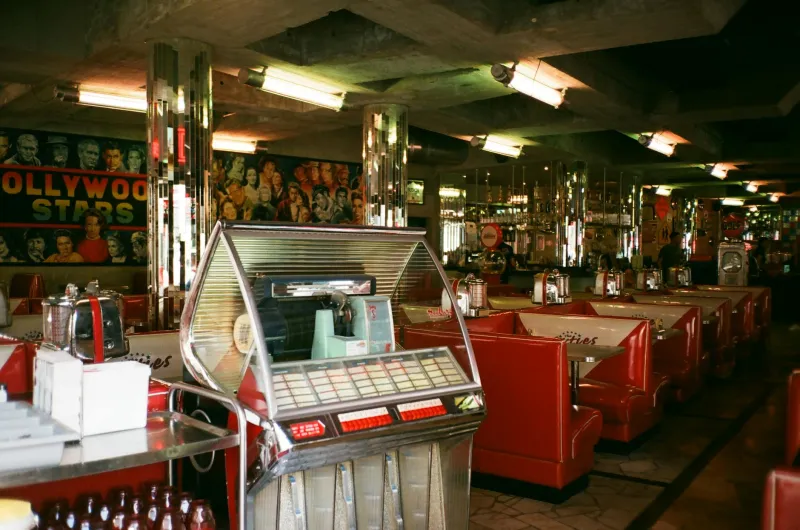
The Psychology of the Spinning Seat
Walk into any classic American diner, and you'll encounter the same piece of furniture that has defined the experience for nearly a century: the counter stool. Round seat, no back, mounted on a swiveling pedestal that squeaks when you turn. You probably assume it's designed for convenience—easy to get on and off, space-efficient, allows you to face the grill and watch your eggs cook.
You're wrong on every count.
The diner stool was engineered specifically to make you uncomfortable. Every design choice, from the backless seat to the spinning mechanism, was calculated to ensure you'd finish your meal quickly and leave. It's furniture as behavioral psychology, and it worked so well that it became the template for the entire fast-food industry that followed.
The Economics of Discomfort
In the 1920s and 1930s, as diners exploded across America, owners faced a mathematical problem: how to maximize revenue in minimal space. Traditional restaurant seating encouraged lingering. Customers would settle into comfortable chairs, order slowly, chat between courses, maybe have a second cup of coffee. This was death to diner economics, which depended on high-volume turnover.
The solution was architectural manipulation. Diner designers studied human behavior and realized that physical comfort directly correlated with time spent sitting. Make people less comfortable, and they'd eat faster and leave sooner. The counter stool became their weapon of choice.
The lack of a backrest wasn't an oversight—it was strategic. Without back support, customers naturally lean forward, creating a sense of urgency and preventing the relaxed posture that encourages lengthy conversations. The spinning mechanism seems convenient, but it actually creates subtle instability. You're always slightly adjusting your position, never fully settled.
Even the height was calculated. Counter stools are deliberately tall, requiring you to hoist yourself up and perch rather than sit naturally. Your feet dangle or rest uncomfortably on footrests. The message is clear: this is temporary.
The Counter Revolution
The counter itself was equally strategic. Unlike traditional restaurant tables that create intimate, enclosed dining spaces, the diner counter is fundamentally public. You're on display, facing the kitchen, surrounded by strangers. Privacy is impossible. Romantic dinners are impractical. The environment discourages everything except efficient food consumption.
The open kitchen design, often celebrated as transparency and entertainment, served a more practical purpose: it allowed staff to monitor customer behavior and optimize service speed. Cooks could see when plates were nearly empty and prepare the next order. Servers could spot customers ready to leave and prepare checks in advance.
Everything about the counter experience was designed to create what hospitality experts call "productive discomfort"—enough unease to motivate quick turnover without being so obvious that customers felt unwelcome.
The Fast-Food DNA
This philosophy didn't stay in diners. When Ray Kroc was developing the McDonald's system in the 1950s, he studied diner operations obsessively. The lessons he learned about managing customer flow through environmental design became foundational to fast-food architecture.
McDonald's original restaurants featured hard plastic seats in bright colors, fluorescent lighting, and minimal sound absorption—all designed to encourage quick eating and discourage lingering. The "15-minute rule" wasn't just about service speed; it was about customer turnover.
Modern fast-casual chains continue this tradition with subtle variations. Chipotle's metal chairs look industrial and modern, but they're deliberately uncomfortable for extended sitting. Starbucks varies its seating—comfortable couches for customers buying expensive drinks and staying to work, harder chairs near the counter for quick coffee runs.
The Comfort Rebellion
Interestingly, the most successful challenges to diner-style seating have come from understanding why it worked. Cracker Barrel built an empire on the opposite approach: oversized rocking chairs, cozy booths, an environment that actively encourages lingering. But they compensated with higher prices and larger portions, changing the economic equation.
Denny's, IHOP, and other diner chains have gradually introduced more comfortable seating while maintaining counter service for customers who want the quick-service experience. The evolution reflects changing American dining habits and generational preferences.
Millennials and Gen Z, raised on coffee shop culture and remote work, expect different things from dining environments. They're willing to pay more for comfort and ambiance. The rigid turnover optimization that made sense in 1950s America feels increasingly outdated.
Sitting with the Truth
The next time you find yourself perched on a diner stool, shifting uncomfortably as you wolf down your breakfast, remember that your discomfort is intentional. That stool beneath you represents one of the most successful pieces of behavioral design in American commercial history—furniture that shaped not just how we eat, but how an entire industry thinks about customer experience.
The diner stool taught American business that customer comfort and business success aren't always aligned, that sometimes the best service means making people slightly uncomfortable, and that the right kind of friction can actually improve the experience for everyone.
It's a lesson that echoes through modern business design, from the standing desks that keep meetings short to the slightly-too-cold air conditioning in retail stores that keeps shoppers moving. The humble diner stool was just the beginning.