Ice Was Once Worth More Than Gold — Now Americans Can't Drink Without It
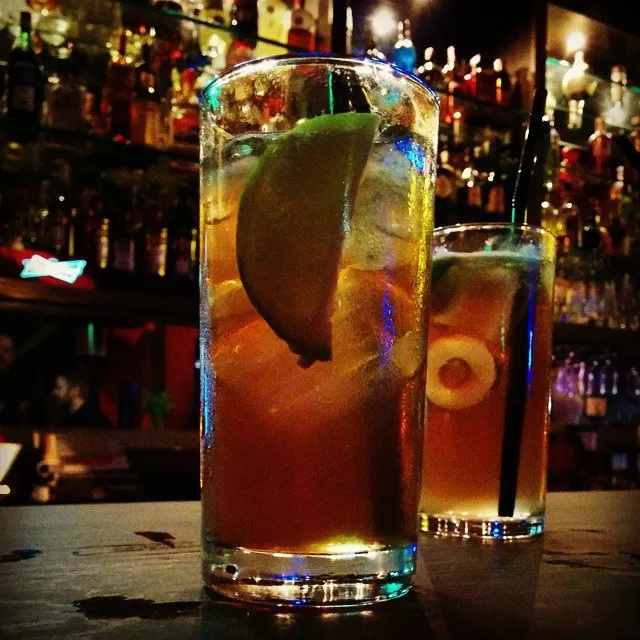
Photo: Eduardo Quagliato from Curitiba, Paraná, Brasil, CC BY 2.0, via Wikimedia Commons
Order a soft drink at a restaurant in Paris or Tokyo and you'll get ice, if you're lucky, as a small afterthought — a cube or two floating apologetically in your glass. Order that same drink anywhere in the United States and you'll get a cup that is roughly 40 percent ice before a single drop of liquid has been added. Ask for less ice and the server will look at you like you've said something slightly suspicious.
This is so normal to Americans that most don't register it as a cultural choice. It just seems like how cold drinks work. But the rest of the world's relationship with ice is genuinely different, and the reason Americans ended up here — emotionally, physically, and culinarily committed to iced everything — is a story that starts not in a kitchen or a restaurant, but on a frozen Massachusetts pond in the early 1800s.
The Man Who Decided Ice Was a Product
Frederic Tudor was a Boston merchant who, in 1806, became convinced that he could harvest ice from New England's frozen lakes, ship it to warm climates, and sell it for a profit. This sounds reasonable now. At the time, it sounded insane. Ice was something that happened to water in winter. The idea that you could cut it into blocks, pack it in sawdust, load it onto ships, and deliver it to the Caribbean without it melting entirely was widely considered a fantasy.
Tudor proved them wrong, though not without years of financial disaster first. He developed better insulation methods, built purpose-designed icehouses, and eventually cracked the logistics of long-distance ice shipping. By the 1820s, he was sending New England ice to the American South, the Caribbean, South America, and eventually India. He became known as the Ice King, and he was genuinely wealthy.
What Tudor also did, shrewdly, was create the demand he needed to sustain his supply chain. In markets where cold drinks were unfamiliar, he gave away iced beverages for free until people got used to them. Once they were used to them, they wanted to pay for them. He understood, before the concept had a name, that habit is a market.
Ice as a Status Symbol
Through the mid-1800s, ice remained expensive enough that having it was a social signal. Wealthy American households had iceboxes — insulated wooden cabinets that held a block of ice and kept food and drinks cold for a day or two. The iceman came regularly, delivering new blocks. Homes that could afford daily ice delivery were homes that were doing well.
Serving iced drinks to guests communicated something. It said you had access, resources, and the kind of domestic infrastructure that kept luxuries flowing. Cocktails served cold, punches ladled from ice-filled bowls, chilled desserts — these were all part of a performance of prosperity that the ice trade made possible and that Americans enthusiastically adopted.
That association between ice and quality didn't disappear when ice became cheap. It just became unconscious. The assumption that a cold drink is a better drink, that ice means care and service, was baked into American food culture during decades when ice genuinely was a marker of quality. By the time mechanical refrigeration made ice essentially free, the cultural wiring was already done.
The Refrigerator Sealed the Deal
Electric refrigerators became widely available to American households in the 1920s and 1930s, and nearly every design included a freezer compartment with an ice tray. This was not universal. European refrigerator designs often minimized or omitted dedicated ice-making space. American designs made it central.
The result was a generation of Americans who grew up with ice as a household resource — something that was always there, always free, always ready. You didn't think about whether to put ice in your drink any more than you thought about whether to use a glass. It was simply part of how beverages worked.
Restaurants absorbed this expectation completely. By the postwar era, the automatic ice machine had become standard kitchen equipment, and the refillable iced drink — a custom that baffles visitors from most other countries — was a fixture of American dining culture. Free refills on iced soda at a fast food counter is so ordinary that Americans rarely recognize it as a specific cultural artifact. Almost nowhere else in the world operates this way.
Why the Rest of the World Didn't Follow
The divergence is interesting. Many countries that had access to the same refrigeration technology, the same beverage industry, and the same economic development didn't end up with America's ice habits. Part of this is historical path dependency — they didn't have the ice trade priming the cultural pump in the 1800s. Part of it is practical infrastructure; ice machines require reliable electricity and water systems that weren't uniformly available everywhere.
But part of it is also that other food cultures had different assumptions about temperature and taste. In many European traditions, cold was associated with numbing flavor rather than enhancing a drink. Room temperature wine, warm beer, hot tea — these weren't failures of refrigeration. They were preferences shaped by entirely different culinary logic.
America went the other direction, and then exported its ice expectations globally through fast food chains, hotel culture, and the sheer volume of American travelers who asked for ice everywhere they went.
The Habit That Forgot Its Origins
What's striking about the American ice habit is how completely it erased its own history. Nobody putting ice in their glass at a diner thinks about Frederic Tudor cutting blocks from a Massachusetts lake. Nobody ordering a fountain drink thinks about the icebox that once marked a household as prosperous. The luxury became a default, and the default became invisible.
But the history is still there in the behavior. The reason Americans want ice in everything, and want a lot of it, and feel vaguely cheated when a glass arrives without it, traces directly back to a century when ice was something you had to earn, import, and show off. The habit outlasted every one of those original conditions.
Now it's just how a cold drink is supposed to feel. And somewhere in that assumption lives the ghost of an industry that convinced an entire country that frozen water was worth wanting.