A Gambler Needed to Eat Without Leaving the Table — So Now We Have Lunch
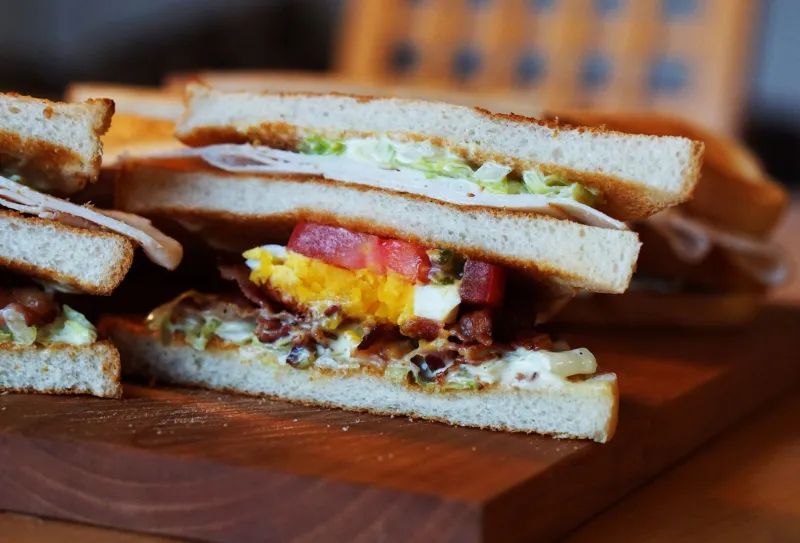
Somewhere in America right now, someone is eating a sandwich. That's not an exaggeration — it's almost a statistical certainty. Americans consume roughly 300 million sandwiches every single day. It's in school lunchboxes, on deli menus, at fast food counters, at upscale restaurants where it costs seventeen dollars and arrives with a tiny flag in it. The sandwich is so embedded in American food culture that it barely registers as a concept anymore. It's just food.
Which makes it all the more strange that we can trace its name to one specific man, one specific night, and one very specific reason that had absolutely nothing to do with nutrition, convenience, or culinary innovation. It had to do with not wanting to lose a hand of cards.
The Earl Nobody Remembers
John Montagu was the Fourth Earl of Sandwich, an English aristocrat who lived from 1718 to 1792. He had a distinguished career — First Lord of the Admiralty, Postmaster General, a figure of genuine political consequence in Georgian England. He was also, by most historical accounts, an obsessive gambler who spent long stretches at the card table and deeply resented anything that pulled him away from it.
The story, first recorded by a French travel writer named Pierre-Jean Grosley in 1765, goes like this: during a particularly extended gambling session, the Earl instructed a servant to bring him meat tucked between two slices of bread. The reasoning was practical. He could eat with one hand and keep playing with the other. No plates to manage, no cutlery to set down, no formal pause in the action. His companions at the table, reportedly impressed by the efficiency of the arrangement, began ordering "the same as Sandwich."
And just like that, a food format was named.
How Accurate Is the Story, Really?
Historians have spent considerable time arguing about this, because bread with fillings existed long before the 1760s. Ancient peoples across the Middle East and Mediterranean were wrapping and folding flatbreads around various fillings for centuries before Montagu was born. Jewish communities had a Passover tradition involving meat between matzah that dates back at least two thousand years. Medieval European workers carried bread stuffed with cheese or meat as portable field lunches.
So the Earl didn't invent the concept. What he did, apparently, was give it a name — or more precisely, his name got attached to it through the social circles that surrounded him. The Georgian aristocracy had a tendency to name things after themselves and each other, and a food format that spread through London's gambling clubs would naturally carry the name of the man most associated with its particular application.
What Grosley documented wasn't an invention. It was a moment of naming. And that moment stuck harder than almost any other food etymology in history.
The Crossing That Changed Everything
The sandwich arrived in America the way most British habits did — gradually, through colonists, immigrants, and cookbook writers who carried their food cultures across the Atlantic. By the early 1800s, American cookbooks were beginning to include recipes for what they called sandwiches, though the format was still considered a fairly refined, tea-party kind of food. It was light, it was tidy, it was something you served to guests.
What transformed it from an elegant nibble into a working-class staple was industrialization. As American cities swelled with factory workers and the lunch break became a fixed feature of the workday, people needed something they could eat quickly, cheaply, and without a dining room. The sandwich was architecturally perfect for this moment. It required no table, no utensils, no reheating. You could carry it in a pail, unwrap it on a loading dock, and finish it in ten minutes.
Immigrant communities adapted it to their own ingredients and traditions, and the American sandwich began its long divergence from its English origins. Italian beef in Chicago. The po'boy in New Orleans. The Reuben, whose own origin story is almost as disputed as the sandwich itself. The club sandwich, the BLT, the hoagie, the hero, the sub — a country of regional identities expressed through bread and filling.
The Food That Crossed Every Line
What's remarkable about the sandwich as an American phenomenon is how thoroughly it erased the class associations it started with. The Earl of Sandwich ate his meat-between-bread at a gambling table in an exclusive London club. Within a century, the same basic format was feeding factory workers, schoolchildren, and immigrants who had never heard of Georgian aristocracy.
That democratization is genuinely unusual in food history. Plenty of dishes that started at the top of the social ladder stayed there, or evolved into expensive versions of themselves as they became fashionable. The sandwich went the other direction. It got cheaper, more portable, more adaptable, more common — until it became the least pretentious food in the American diet.
The Earl's Legacy
John Montagu is not remembered as a great statesman. His tenure at the Admiralty was controversial, and he's been blamed by some historians for the unpreparedness of the British navy during the American Revolution. He had political enemies and a complicated personal life. In the sweep of 18th-century English history, he's a footnote.
But his name is spoken three hundred million times a day across America alone, by people who have no idea they're referencing an English earl who just really didn't want to stop gambling. The sandwich outlasted everything else about him. It crossed the ocean, crossed every class line, crossed into fast food and fine dining and everything in between.
Not bad for a man who just wanted to keep his hands free at the card table.