Americans Sealed Chips With Laundry Clips for 50 Years — Then Snack Food Changed Everything
The Clothespin Solution Nobody Questioned
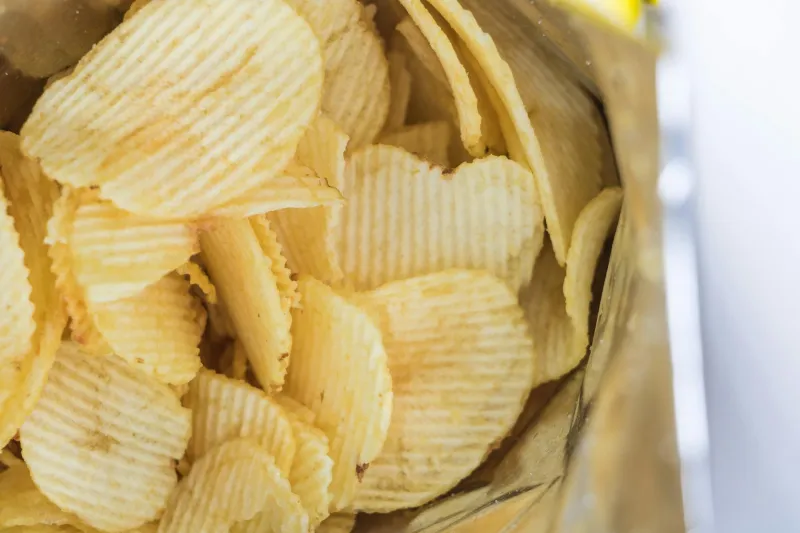
Walk into any American kitchen in 1975 and open the snack cabinet. You'd find a handful of potato chip bags, pretzels, and crackers, all sealed with the same thing: wooden clothespins stolen from the laundry room. It was such a universal solution that nobody even thought about it.
The clothespin-as-chip-clip system worked flawlessly for generations. The spring mechanism provided perfect tension, the wood didn't scratch countertops, and when you needed it for actual laundry, you just grabbed another one from the bag. It was elegant in its simplicity.
Then sometime in the 1980s, someone decided this wasn't good enough anymore.
When Snack Food Exploded
The problem wasn't with clothespins — it was with what they were trying to seal. In the 1970s and 80s, the American snack food industry underwent a massive transformation. Frito-Lay, Nabisco, and other companies began pumping out dozens of new products every year, each in increasingly sophisticated packaging.
Suddenly, kitchen cabinets weren't just holding a few bags of chips. They were storing an arsenal of different snack packages: resealable pouches, foil-lined bags, multi-layer packaging, and containers that seemed designed by aerospace engineers. The humble clothespin, designed for hanging wet shirts, was being asked to handle materials it was never meant to encounter.
The snack industry had accidentally created a household problem that didn't exist before: how to keep an ever-expanding variety of packages fresh with a tool designed for laundry.
The Great Clip Innovation of 1982
Enter Karl Dick (yes, really), a Pennsylvania inventor who noticed his wife struggling with clothespins on modern snack bags. In 1982, he patented the first dedicated "bag clip" — a plastic device specifically designed for food packaging.
 Photo: Karl Dick, via yt3.googleusercontent.com
Dick's innovation wasn't revolutionary technology. It was basically a clothespin redesigned for the kitchen, with a wider grip, food-safe materials, and better leverage for thick modern packaging. But it solved a problem that millions of Americans were suddenly experiencing.
The timing was perfect. American households were buying more packaged snacks than ever before, and the packaging was getting more complex every year. A solution designed specifically for this new reality felt like genius.
How Marketing Created a Need
What happened next is a masterclass in creating demand for something people didn't know they needed. Companies like Kwik Lok and Hefty began marketing chip clips not as clothespin replacements, but as essential kitchen tools.
The advertising focused on "freshness protection," "airtight seals," and "extended shelf life" — benefits that clothespins had been providing quietly for decades. But by positioning the chip clip as a specialized tool, companies made the clothespin seem primitive and inadequate.
Infomercials in the late 1980s pushed the narrative further, showing frustrated homeowners struggling with "outdated" clothespins while demonstrating the superior performance of dedicated clip products. The message was clear: if you were still using laundry clips for food storage, you were doing it wrong.
The Viral Kitchen Gadget Before Viral Existed
By the 1990s, chip clips had become one of those kitchen items that seemed to multiply on their own. Hardware stores, grocery stores, and gas stations all carried variations. They appeared in Christmas stockings, housewarming gifts, and promotional giveaways.
The clip had achieved something remarkable: it had convinced Americans that a problem they'd solved perfectly well for 50 years actually required a specialized solution. It was viral marketing before the internet, spread through word-of-mouth and impulse purchases at checkout counters.
Different companies began competing on features: magnetic clips for refrigerators, labeled clips for organization, decorative clips for style. The simple clothespin had spawned an entire micro-industry.
The Internet Discovers the Clothespin
In the 2000s, something funny happened. Frugality blogs and life hack websites began "discovering" that clothespins could be used for food storage. Articles with titles like "10 Surprising Uses for Clothespins" treated this as revolutionary insight, not standard practice that had worked for generations.
Younger Americans, raised in the chip clip era, were genuinely amazed that clothespins could seal bags. Comment sections filled with people sharing this "hack" with friends who had somehow forgotten that their grandparents had been doing this forever.
The internet had come full circle, rediscovering the original solution to a problem that the chip clip industry had convinced everyone was inadequately solved.
Why This Matters More Than You Think
The chip clip story is really about how industries can create demand by reframing existing solutions as insufficient. Americans had a perfectly functional system for keeping snacks fresh, but the snack food industry's packaging evolution created an opportunity for entrepreneurs to sell a "better" solution.
It's the same pattern you see with countless kitchen gadgets: specialized tools that solve problems you didn't know you had, often replacing simple solutions that worked fine. The avocado slicer, the banana cutter, the bagel guillotine — all addressing "problems" that knives had been solving for centuries.
Today, you can buy chip clips that connect to your phone, track expiration dates, or play music. The humble clothespin, meanwhile, still costs 50 cents and still seals bags perfectly.
Sometimes the old way isn't broken. Sometimes it just needs better marketing.