The Lunch Pail That Drew America's Class Lines — Until One Scientific Bottle Erased Them
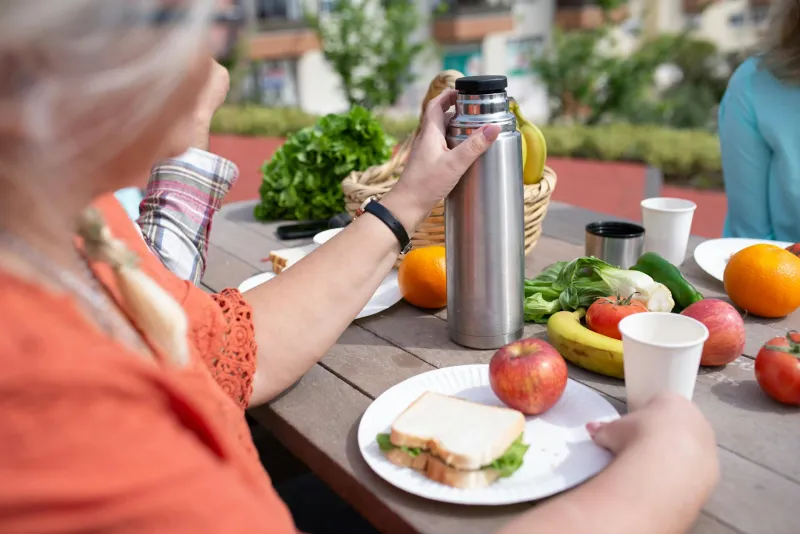
The Tin Badge of Working Life
Every morning across industrial America, millions of workers grabbed the same thing on their way out the door: a dented tin pail that would keep their lunch cold, soggy, and thoroughly unappetizing by noon. The lunch pail wasn't just a container — it was a class marker as obvious as a uniform.
While office workers disappeared into restaurants or company cafeterias, factory hands, construction crews, and laborers sat on loading docks unwrapping sandwiches that had been slowly decomposing since dawn. The tin pail system worked, technically, but it also drew an invisible line between who could afford hot lunch and who couldn't.
Then in 1904, a German glassblower's scientific experiment accidentally changed everything.
When Science Needed to Keep Things Cold
Reinhold Burger wasn't thinking about lunch when he invented the vacuum flask. He was solving a laboratory problem: how to store liquid air and other scientific materials at stable temperatures. His double-walled glass container, with the air sucked out between the walls, could keep hot things hot and cold things cold for hours.
Burger called it a "Dewar flask" after scientist James Dewar, but when he tried to market it commercially, he needed a catchier name. The American Thermos Bottle Company bought the rights in 1907 and gave it the name we know today — from the Greek word "thermos," meaning heat.
 Photo: James Dewar, via 3.bp.blogspot.com
What happened next surprised everyone. Americans didn't buy Thermos bottles for scientific experiments. They bought them for lunch.
The Middle-Class Lunch Revolution
The Thermos bottle arrived at the perfect moment in American history. The country was urbanizing rapidly, creating a new class of office workers, salesmen, and middle managers who worked away from home but didn't want to eat like laborers. They needed something better than a tin pail, but they also couldn't afford restaurant meals every day.
The Thermos solved both problems at once. Suddenly, a secretary could carry hot soup to work in January. A traveling salesman could keep his coffee warm on a long train ride. A bank clerk could enjoy a hot meal without leaving his desk or spending his salary at the company cafeteria.
More importantly, the Thermos looked respectable. Its sleek chrome exterior and scientific pedigree made it seem sophisticated, almost medical. Carrying a Thermos didn't mark you as working-class — it marked you as modern.
The Great Lunchtime Leveling
By the 1920s, the Thermos had quietly revolutionized American lunch culture. Office workers who once envied executives with their restaurant meals now carried elaborate home-packed lunches that stayed hot all morning. Factory workers upgraded from tin pails to insulated lunch boxes with Thermos bottles inside.
The advertising reflected this shift. Early Thermos ads showed well-dressed businessmen and fashionable women using the bottles, not factory workers. The company positioned their product as a tool of efficiency and sophistication, not necessity.
But the real revolution was subtler. The Thermos made quality lunch democratic. A construction worker with a Thermos could eat a better hot meal than an office worker buying a cold sandwich at a deli. The technology leveled the playing field in a way that surprised everyone.
The Lunchbox Industrial Complex
The success of the Thermos bottle created an entire industry around portable meals. Insulated lunch boxes, vacuum-sealed containers, and specialized food storage became standard household items. What started as a scientific instrument spawned a billion-dollar market.
By the 1950s, the metal lunch pail had become a nostalgic symbol of an earlier era, while the Thermos-equipped lunch box represented modern American efficiency. Television shows and movies used lunch containers as visual shorthand: tin pails for blue-collar characters, sleek lunch boxes for suburban families.
The class implications never entirely disappeared, but they became more subtle. Instead of dividing workers from office staff, lunch containers began distinguishing between different levels of middle-class aspiration.
Why This Still Matters
Today's food delivery apps and office microwaves have largely solved the hot lunch problem, but the Thermos bottle's impact on American culture runs deeper. It proved that the right technology could dissolve class barriers that seemed permanent.
The lunch pail didn't disappear because better restaurants opened or wages increased. It disappeared because an unrelated scientific innovation made its class implications obsolete. Sometimes the most profound social changes happen accidentally, one hot lunch at a time.
Every time you twist open an insulated coffee cup or pack a hot meal in a vacuum container, you're participating in a quiet revolution that started in a German laboratory and ended up reshaping how Americans think about eating away from home.