The Birthday Candle Was a Prayer to a Moon Goddess — America Just Forgot That Part
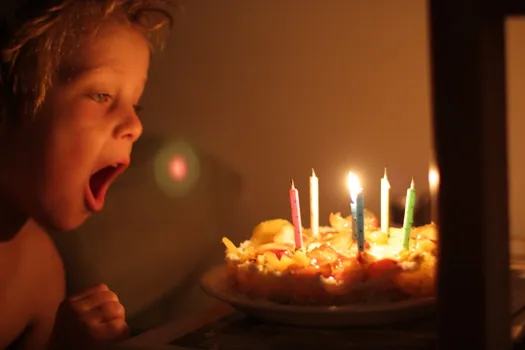
Photo: Suzette - www.suzette.nu from Arnhem, Netherlands, CC BY 2.0, via Wikimedia Commons
Every year, millions of American children close their eyes, take a deep breath, and blow out the candles on their birthday cake while a room full of people watches in expectant silence. It's one of the most rehearsed moments in American childhood — familiar enough to feel almost biological, like something humans have always done.
They haven't. The birthday candle ritual is roughly 2,500 years old, it started as a religious ceremony dedicated to a Greek moon goddess, and by the time it became a staple of American birthday parties, every trace of its original meaning had been quietly erased. What's left is pure habit — beautiful, slightly mysterious, and completely unexamined.
That's worth looking at.
The Goddess Who Started the Whole Thing
The story begins in ancient Greece, with Artemis — goddess of the moon, the hunt, and, among other things, childbirth. Her followers celebrated her with offerings at her temple, and those offerings frequently included round honey cakes that were designed to resemble the full moon. To make the cakes glow the way the moon did, worshippers placed lit candles on top.
 Photo: Artemis, via static.india.com
The candles weren't decorative. They were functional — a way of sending the smoke and light upward as a kind of prayer, a signal to the divine. The idea that smoke carries wishes or intentions toward the heavens is ancient and nearly universal across cultures, but the Greeks were particularly systematic about it. The candles on Artemis's moon cake were a ritual act with a specific spiritual purpose.
Birthdays as a concept worth celebrating also have Greek roots, though the practice was initially reserved for gods and, later, kings and emperors. Ordinary people didn't typically mark their birthdays with ceremonies. But the association between candles, round cakes, and significant occasions was already being established.
How Germany Turned It Into a Children's Party
The leap from Greek temple offering to children's birthday tradition happened largely in Germany, and it took about 1,500 years.
By the 18th century, German families were celebrating Kinderfest — children's festivals — that included a special birthday cake with candles. A child received one candle for each year of their age, plus one extra candle representing the hope of another year to come. The candles were lit at dawn and kept burning throughout the day, being replaced as they burned down. At the end of the celebration, the child blew them out.
The wish-making element appears to have developed organically from the smoke tradition — if smoke carried prayers upward, then a secret wish made at the moment of extinguishing might travel the same route. It was folk belief layered on top of older ritual, with the original religious meaning already starting to blur.
German immigrants brought Kinderfest traditions to America in the 18th and 19th centuries, particularly to Pennsylvania, where German communities were well established. But the practice spread slowly. For most of American history, elaborate birthday celebrations were not the norm.
The Moment America Decided Birthdays Were a Big Deal
For most of the 19th century, American birthday celebrations were modest affairs, if they happened at all. Birthdays were acknowledged within families, but the idea of a dedicated party with cake, candles, and organized ritual was not widespread. Children's parties as a cultural institution barely existed.
Two things changed that: the rise of the middle class and the invention of the greeting card industry.
As American families became more prosperous through the late 1800s and early 1900s, childhood itself was reimagined as a special, protected phase of life rather than simply a waiting period before adult labor. Children deserved celebration. Their birthdays deserved marking. The greeting card industry — which exploded in the early 20th century — needed occasions to sell cards for, and birthdays were a perfect fit.
By the 1920s, children's birthday parties had become a middle-class expectation in America. Department stores sold party supplies. Magazines published guides to throwing the perfect birthday celebration. And the birthday cake, complete with candles, had become the centerpiece of the whole event.
The Supermarket Sheet Cake and the Death of Meaning
Once the birthday cake became commercial, it moved fast. By the mid-20th century, bakeries and grocery stores were producing standardized sheet cakes with pre-written frosting messages, and the candles were no longer ceremonial objects — they were products sold in small boxes near the checkout line.
The ritual survived the commercialization perfectly intact in its outward form. Children still blow out candles. People still sing. The wish is still made in silence. But the theological scaffolding that once supported the whole ceremony — the moon goddess, the smoke prayer, the sacred significance of flame — had been completely dismantled.
America didn't strip the birthday candle of its meaning through hostility or deliberate secularization. It just absorbed the tradition, repeated it, sold it, and kept repeating it until the form became the point. The candle is now a candle. The wish is now a wish. Nobody is thinking about Artemis.
Why We Still Do It Anyway
Here's the thing about rituals that outlive their original purpose: they often become more meaningful in their emptied state, not less. The birthday candle ceremony works precisely because it's been stripped of specific doctrine. Any child, any family, any belief system can participate. The wish is private. The moment is shared. The symbolism is just vague enough to belong to everyone.
Ancient Greek priests designed that ceremony to communicate with a goddess. German bakers adapted it to celebrate childhood. American commerce packaged it and sold it by the box.
And somewhere in the middle of all that history, it became one of the few rituals that almost every American has performed — eyes closed, breath held, making a wish in the dark before the smoke rises.