The Unglamorous Spice That Made New England Rich Before Anyone Cared About Lobster
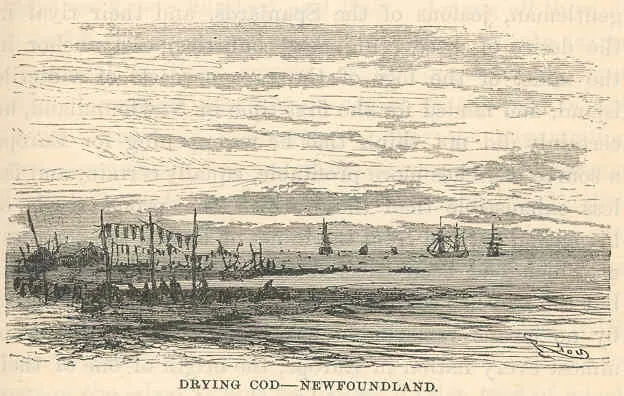
Photo: Unknown authorUnknown author, Public domain, via Wikimedia Commons
Ask most Americans what defines New England food and you'll get a familiar list: lobster rolls, clam chowder, baked beans, maybe a whoopie pie if they've been to Maine. What almost nobody mentions is the ingredient that actually funded the region's rise — the one that made the fishing trade viable, kept colonial settlements alive through brutal winters, and quietly connected the cold North Atlantic to Caribbean sugar plantations in a trade network that shaped early American economics. That ingredient is salt. Specifically, the salt used to preserve cod.
It's not a romantic story. Salt cod is not pretty. It smells aggressively of itself. It requires soaking for a day or two before it's even edible. But for roughly two centuries, it was more valuable to New England's economy than almost anything else — and the supply chain that moved it around the Atlantic world is one of the most overlooked chapters in American food history.
The Fish That Needed a Partner
Cod was always the prize. The waters off the New England coast — particularly around the Grand Banks of Newfoundland — were so thick with Atlantic cod in the 1600s that early European explorers reportedly described being able to pull them from the water in baskets. For fishing communities, this was an obvious opportunity. The problem was getting the fish from the ocean to the people who would eat it without the whole operation rotting in transit.
 Photo: Grand Banks of Newfoundland, via imgv2-2-f.scribdassets.com
Refrigeration didn't exist. Ice was available in winter but impractical for long voyages. The solution that made the cod trade possible was preservation through heavy salting — a technique Europeans had used for centuries but that New England fishermen turned into an industrial operation.
Dried and salted cod could survive months at sea and in storage. It could travel to southern Europe, to the Caribbean, to South America. It was calorie-dense, protein-rich, and cheap enough to feed large populations of workers. The moment New England fishermen figured out how to produce it reliably and at scale, they had a product the entire Atlantic world wanted.
The Salt Problem Nobody Talks About
Here's the part that gets skipped in most tellings: New England didn't have great salt. The climate was wrong for large-scale solar evaporation, which was how most of the world's salt was produced. Early colonial fishermen were dependent on imported salt — primarily from southern Europe, the Caribbean islands, and eventually the salt works of the Turks and Caicos — to keep their entire industry running.
 Photo: Turks and Caicos, via www.worldatlas.com
This created a supply chain with remarkable reach. New England fishing boats would head north to the Grand Banks, return with their catch, salt and dry the cod on wooden flake stands along the shore, then load the preserved fish onto merchant vessels heading south. Some of that salt cod went to southern European Catholic markets, where it was prized as a Friday fish. A significant portion went to the Caribbean — to the sugar plantations of Barbados, Jamaica, and other islands — where enslaved workers were fed cheap salt cod as a primary protein source.
In return, New England merchants received sugar, molasses, and eventually rum. That molasses flowed into Boston distilleries, producing the rum that became another major colonial export. The whole triangle was powered, at its base, by the humble act of packing fish in salt.
What Salt Cod Built
The economic consequences were enormous and lasting. Fishing families in Massachusetts, Maine, and Connecticut built genuine wealth from the cod and salt trade. Boston merchants who ran the export networks became among the most prosperous people in colonial America. The phrase "Sacred Cod" — referring to the carved wooden codfish that has hung in the Massachusetts State House since 1784 — reflects just how central the fish was to the region's self-image and economic identity.
 Photo: Massachusetts State House, via cnaclassesnearyou.com
But the salt that made all of it possible rarely gets its own acknowledgment. It was the invisible infrastructure of a visible industry. Without reliable, affordable salt, the cod trade collapsed. With it, New England had an export product that could compete in global markets and fund the growth of towns, churches, schools, and eventually revolutionary politics.
Historians who study the early American economy have noted that the triangular trade connecting New England fishing, Caribbean sugar, and Atlantic salt was one of the first truly global supply chains operating in North America. It predated the cotton economy of the South, predated industrialization, and predated most of the economic systems Americans now think of as foundational.
The Legacy on Your Plate
Salt cod itself has mostly faded from mainstream American cooking. You can still find it in Portuguese-American communities in Massachusetts and Rhode Island, where bacalhau — the Portuguese name for salt cod — remains a living culinary tradition. Caribbean cuisines brought to the U.S. by immigrant communities also keep the ingredient alive, in dishes like Jamaican ackee and saltfish or Puerto Rican bacalaítos.
But the broader New England food identity that salt cod helped create — the emphasis on seafood, on preserved and practical ingredients, on feeding people through hard winters with whatever the ocean provided — is still visible in every bowl of chowder and every lobster shack along the Maine coast.
The lobster roll gets the Instagram post. The salt gets the footnote. But without the unglamorous white crystals packed around barrels of fish in the 1600s, the story of New England food — and a significant piece of early American economic history — doesn't happen the way it did.
Some ingredients don't make it onto menus. They just make everything else possible.