A Chemist Held a Bowl Over a Beer Barrel — And Changed What America Drinks Forever
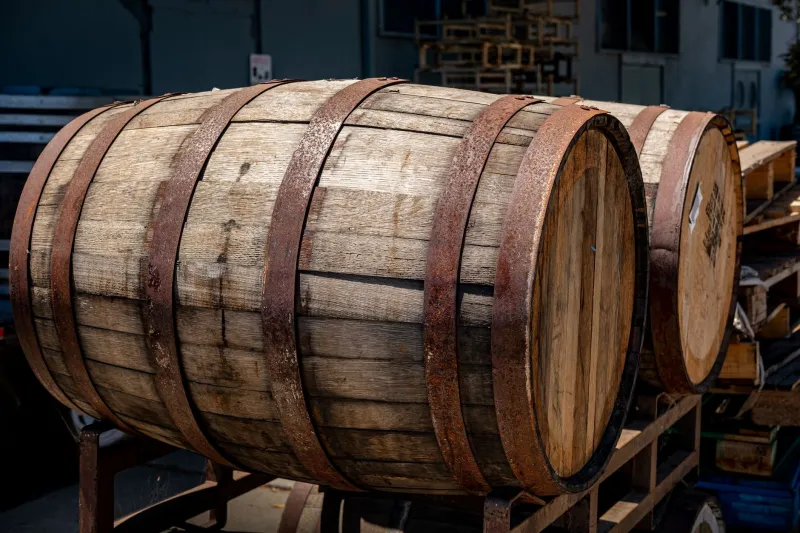
There's a good chance you cracked open something fizzy today. Maybe it was a soda, a sparkling water, a craft IPA, or one of those canned cocktails that have taken over every grocery store cooler in the country. Whatever it was, you probably didn't stop to wonder why it had bubbles. You just expected them. That expectation — that quiet, carbonated assumption — traces back to a single weird afternoon in an English brewery in 1767, when a man named Joseph Priestley decided to hold a bowl of water over a vat of fermenting beer and see what happened.
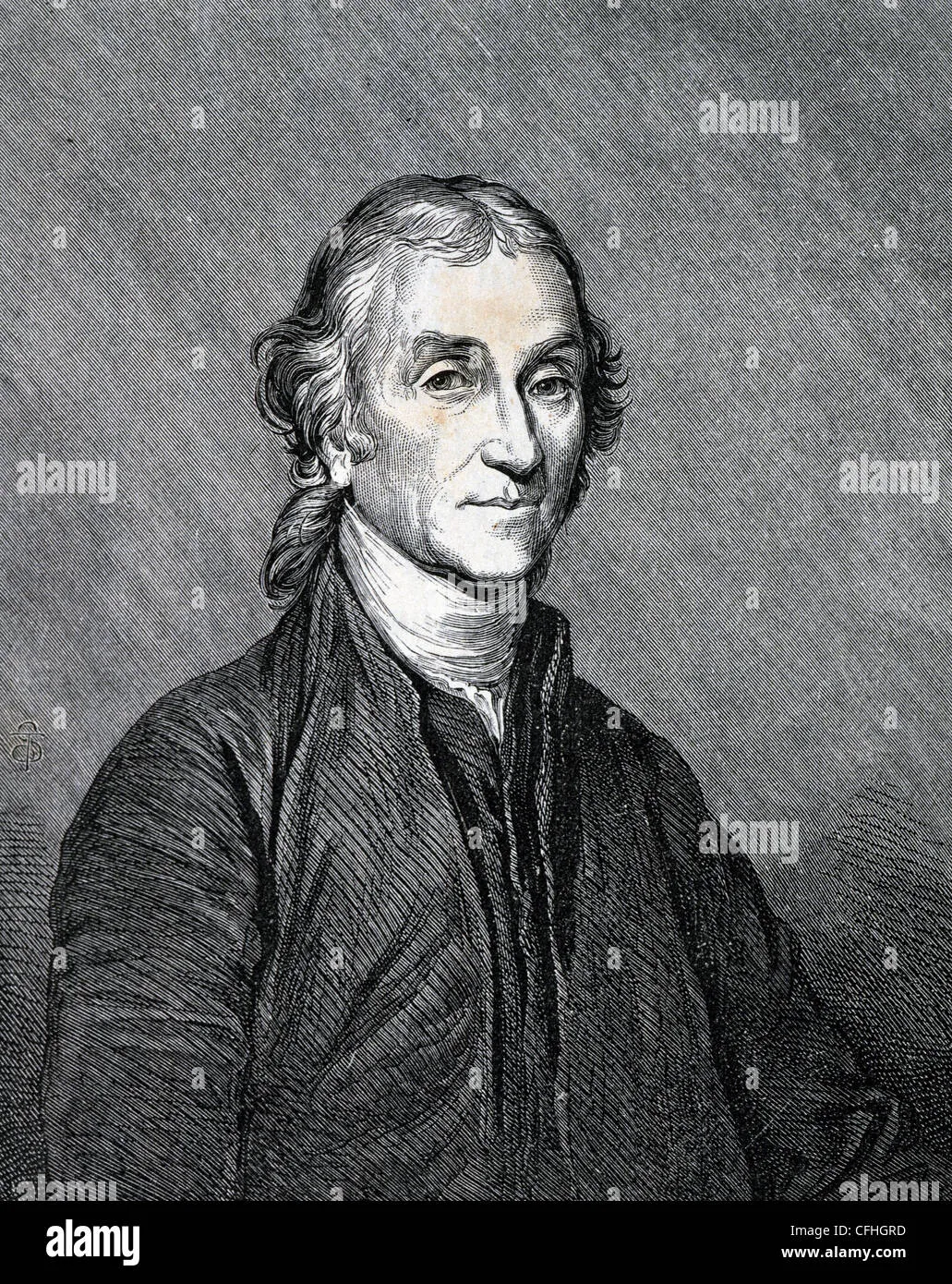 Photo: Joseph Priestley, via c8.alamy.com
Spoiler: it changed everything.
The Scientist Who Didn't Mean to Reinvent Drinking
Joseph Priestley was a polymath — a theologian, a political thinker, and one of the most restlessly curious scientists of the eighteenth century. He's probably best known for isolating oxygen, but the discovery that quietly reshaped daily life for billions of people came earlier, and almost entirely by accident.
In Leeds, England, Priestley lived next door to a brewery. He was fascinated by the heavy gas that hovered just above the fermenting liquid in the open vats — what we now know as carbon dioxide, though Priestley called it "fixed air." Curious about its properties, he suspended a container of water directly above the fermenting beer and let the gas dissolve into it over time.
What he got was water with a sharp, pleasant tingle. He described the result as having "a peculiar satisfaction" and noted it tasted refreshingly acidic. He'd created the world's first intentionally carbonated water — not by engineering, but by improvising with whatever was nearby.
Priestley published his findings in 1772 in a pamphlet titled Impregnating Water with Fixed Air, and the scientific community took notice almost immediately. He even presented the method to the British Admiralty as a potential remedy for scurvy on long sea voyages, though that particular application never quite caught on.
From Curiosity to Commerce
What happened next is the part food history tends to gloss over. Priestley himself had zero interest in commercializing his discovery — he gave the method away freely and moved on to his next obsession. But entrepreneurs across Europe absolutely did not move on.
A Swiss watchmaker named Johann Jacob Schweppe saw the commercial potential almost immediately. By the late 1780s, he had refined the carbonation process and was selling bottled sparkling water in Geneva. He eventually moved to London, and by the early 1800s, Schweppes — yes, that Schweppes — was supplying carbonated water to pharmacies and health establishments across Britain.
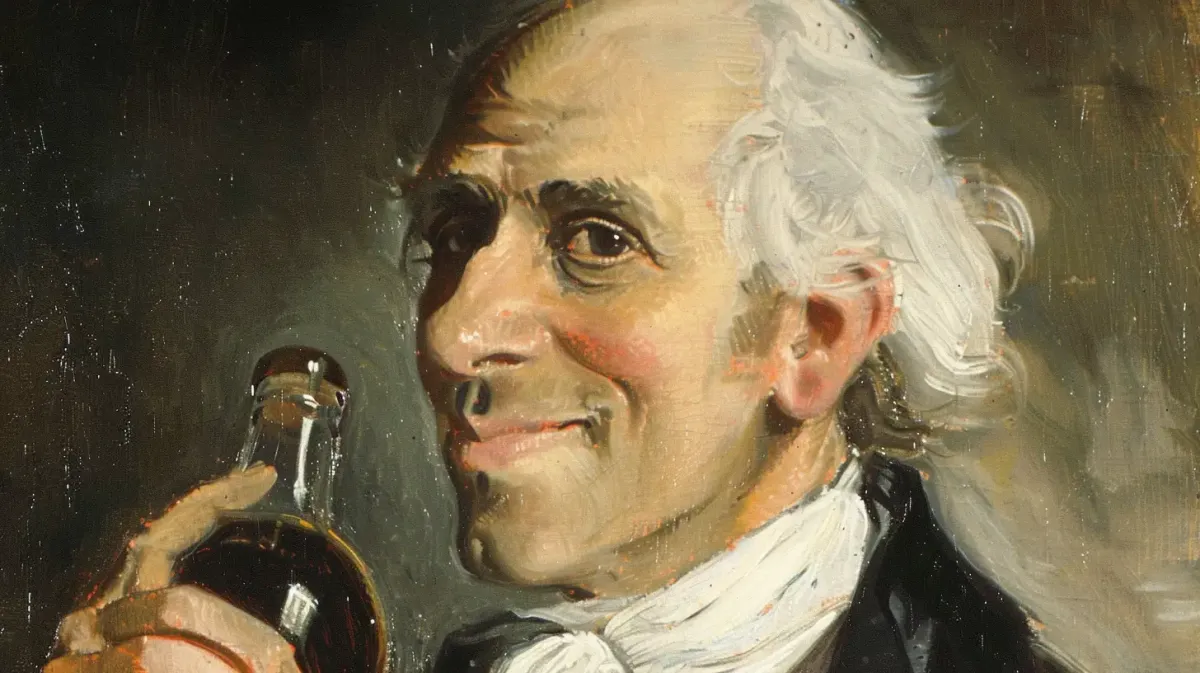 Photo: Johann Jacob Schweppe, via assets-global.website-files.com
The medical angle was crucial. Early carbonated water was sold as a health product, a cure for digestive complaints and a genteel alternative to alcohol. American pharmacies picked up on this in the early nineteenth century, setting up soda fountains where customers could get a glass of sparkling water mixed with various flavored syrups. These were social gathering spots as much as anything else — early versions of the coffee shop, built entirely around the theater of bubbles.
How America Made Fizz Its Own
By the mid-1800s, carbonation had jumped from pharmacy counters to industrial production. Glass bottle technology improved. Pressurized systems became more reliable. And then the American beverage industry did what the American beverage industry has always done — it scaled aggressively and marketed relentlessly.
Coca-Cola launched in 1886 as a carbonated syrup drink sold at Atlanta soda fountains. Pepsi followed in 1893. By the early twentieth century, soft drinks were no longer a novelty or a health product — they were just part of American life, available at every diner, lunch counter, and corner store in the country.
Beer carbonation followed a parallel track. While traditional British ales were served with minimal carbonation and at cellar temperature, American lager producers — many of them German immigrants who arrived in the mid-1800s — leaned hard into cold, crisp, highly carbonated beer as a selling point. It was lighter, it was refreshing, and it was perfectly suited to the kind of industrial-scale production that was taking over the brewing industry. By the time Prohibition ended in 1933, the American palate had been so thoroughly trained on fizzy, cold beverages that there was almost no going back.
Why the Rest of the World Thinks We're Obsessed
And here's where it gets culturally interesting. The United States consumes more carbonated soft drinks per capita than almost any other country on earth. Americans drink, on average, somewhere around 38 gallons of soda per person per year — though that number has been slowly declining as sparkling water and hard seltzers have eaten into soda's dominance. Either way, the bubbles haven't gone anywhere. They've just migrated.
Visitors from Europe, Asia, and Latin America frequently comment on the American obsession with fizzy drinks — the enormous fountain sodas, the carbonated water at restaurants, the expectation that every meal comes with something that crackles and hisses when you open it. In many parts of the world, still water is the default. In the US, it almost feels like an afterthought.
That cultural preference didn't happen by accident. It was built over two and a half centuries of marketing, infrastructure, and deeply embedded habit — all of it traceable, in some winding way, back to a scientist in Leeds who was just curious about the gas floating above a barrel of beer.
The Bubble That Never Popped
Priestley never got rich from his discovery. He died in 1804, having spent his later years in Pennsylvania after fleeing England amid political controversy. He probably had no idea what he'd set in motion.
Today, the global carbonated beverages market is worth hundreds of billions of dollars. Sparkling water alone has become a lifestyle category. Craft beer culture obsesses over carbonation levels the way wine culture obsesses over tannins. And somewhere in a supermarket right now, someone is reaching past six varieties of still water to grab the one with bubbles — without once stopping to wonder why.
Now you know.