How a Tuberculosis Scare Gave America Its Paper Cup Obsession
Photo: Acabashi, CC BY-SA 4.0, via Wikimedia Commons
There's a good chance you used a disposable cup this morning without giving it a second thought. Coffee shop, gas station, office water cooler — paper and cardboard cups are so woven into American daily life that imagining an alternative feels almost impossible. But a little over a century ago, the disposable cup didn't exist. And the reason it got invented has almost nothing to do with convenience, and everything to do with one of the most gripping public health panics in American history.
The Shared Cup Nobody Questioned
Before the 1900s, public drinking stations — train cars, school hallways, street corners — typically offered a single communal metal or tin cup chained to a basin or barrel. Everyone drank from it. Rich, poor, sick, healthy. Nobody particularly questioned it. Sharing a cup was simply what you did when you were thirsty in public. It was so normalized that reformers who tried to flag the practice as unsanitary were largely ignored.
Then tuberculosis started killing people at a terrifying rate, and the conversation changed fast.
By the early 1900s, TB — then called consumption — was responsible for roughly one in seven deaths in the United States. Public health officials were desperate for explanations and, more urgently, for scapegoats. The shared drinking cup became one of the most visible targets. Scientific research was beginning to demonstrate that bacteria could travel through saliva, and suddenly that communal tin cup hanging off the public water barrel looked less like a civic convenience and more like a disease delivery system.
State legislatures began responding. Kansas became the first state to ban shared public drinking cups in 1909. Others followed quickly. Almost overnight, millions of Americans were thirsty in public with no legal way to drink.
The Inventor Who Saw an Opening
A Boston lawyer named Lawrence Luellen had been quietly working on a solution before the bans even hit. Luellen wasn't a scientist or a public health official — he was an entrepreneur who recognized that hygiene anxiety was about to create a massive market gap. His idea was simple: a small, cone-shaped paper cup that could be used once and thrown away. No sharing. No germs. No problem.
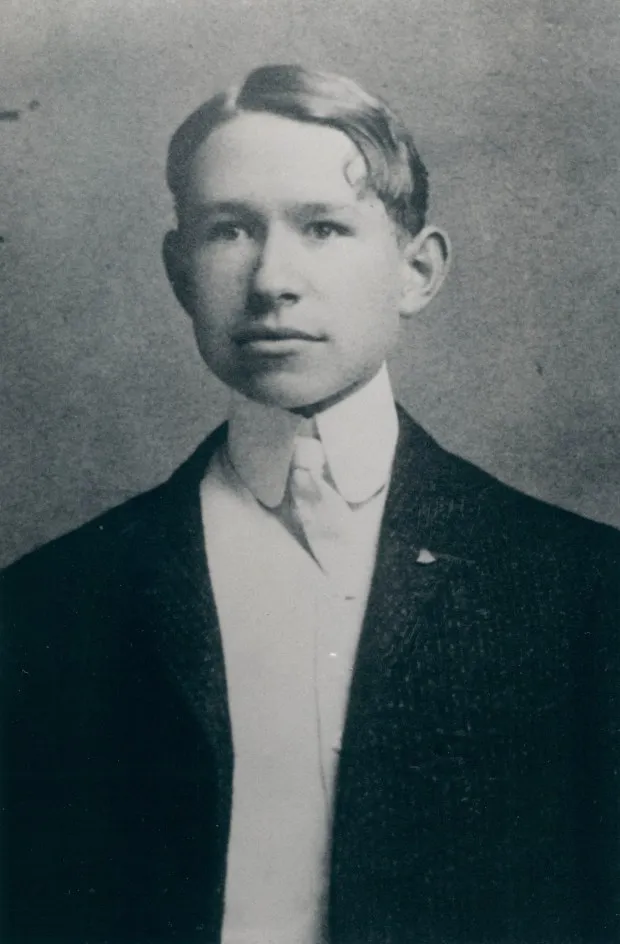 Photo: Lawrence Luellen, via www.mcall.com
Luellen partnered with a public health advocate named Hugh Moore to commercialize the concept, and in 1908 they began installing dispensing machines — holding individual paper cups alongside chilled water — in railroad cars and public spaces. The pitch was straightforward and perfectly timed: why risk your health on a cup a hundred strangers had already used when you could have your own, clean, personal cup for a fraction of a cent?
The product was initially called the Health Kup. It was later rebranded — borrowing the name from a popular doll of the era — as the Dixie Cup. That name stuck, and so did the concept.
From Railroad Cars to Every Counter in America
The early growth of the disposable cup was driven almost entirely by institutional buyers: schools, hospitals, railway companies, and eventually the military. During World War I, the U.S. Army banned shared canteens and promoted individual paper cups as a sanitation measure. That decision introduced an entire generation of American men to the idea that a single-use cup was not a luxury but a basic standard of cleanliness. When they came home, they brought that expectation with them.
Through the 1920s and 1930s, the Dixie Cup company aggressively marketed to schools and offices, arguing that shared cups were not just unhygienic but vaguely uncivilized. The messaging worked. Water coolers — those squat, gurgling machines that became office fixtures — were almost always paired with a sleeve of paper cups. The combination became so standard that it's still how most American offices operate today.
Fast food, when it exploded in the postwar decades, needed a cup infrastructure that could handle enormous volume at low cost. The disposable cup, already proven and already trusted, was the obvious answer. McDonald's, Dairy Queen, and their competitors built their entire beverage programs around it. The paper cup didn't just fit into fast food culture — it helped define what fast food culture looked like.
How Fear of Germs Designed Your Daily Routine
What's striking about the Dixie Cup story is how much of modern American life flows from that original tuberculosis panic. The rhythm of grabbing a coffee to go, the water cooler as a social hub, the drive-through drink with its domed plastic lid — all of it traces back to a moment when Americans decided that sharing was dangerous and individual, disposable containers were the civilized alternative.
Other countries never had quite the same conversion experience. In many parts of Europe and Asia, reusable cups, glasses, and communal drinking vessels remained normal long after Americans had abandoned them. The U.S. went all-in on disposability partly because of genuine public health progress and partly because of cultural anxiety that was, historians now note, somewhat overblown. The shared cup was a real risk, but it was probably not the epidemic-scale threat that early 20th century health campaigns made it out to be.
None of that changes what happened. Fear, real or amplified, created a market. That market created an industry. That industry shaped how an entire country experiences thirst, convenience, and the simple act of getting a drink during the day.
Next time you reach for that paper cup at the office water cooler or peel back the lid on your morning coffee, you're holding the direct descendant of a tuberculosis-era emergency solution. Lawrence Luellen probably never imagined his paper cone would end up at the center of a $15 craft latte culture. But here we are.