Eating After Dark Used to Be a Medical Emergency — Here's How It Became America's Favorite Quiet Ritual
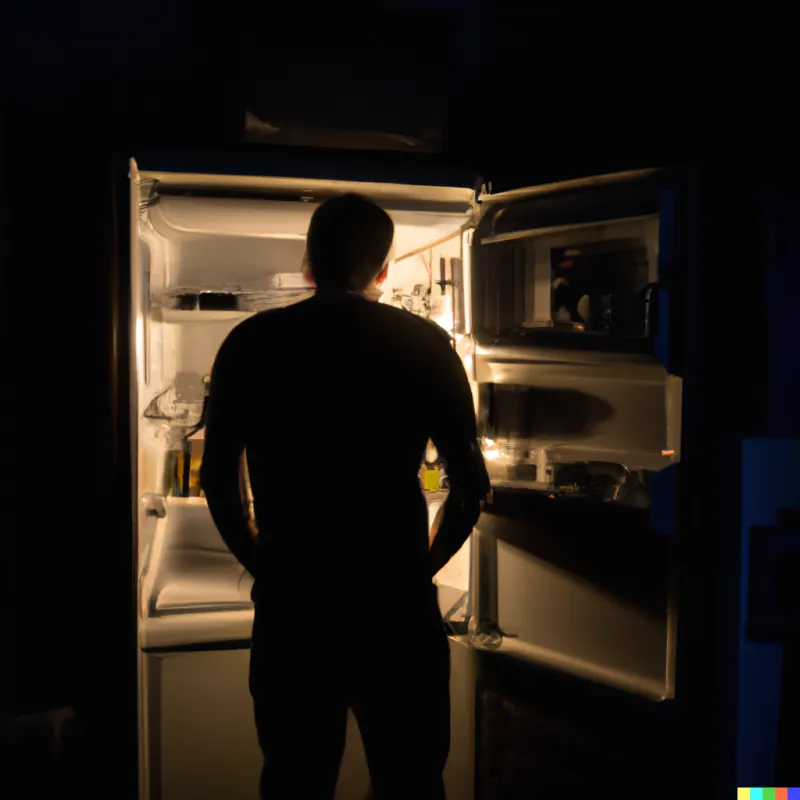
Photo: person standing in front of open refrigerator at night kitchen dark, via i.redd.it
Eating After Dark Used to Be a Medical Emergency — Here's How It Became America's Favorite Quiet Ritual
Somewhere between midnight and one in the morning, millions of Americans are standing in front of an open refrigerator, staring at its contents with the particular blankness of someone who isn't entirely sure why they're there. They're not starving. Dinner was hours ago. But something pulled them out of bed and into the kitchen, and now they're committed.
The midnight snack feels instinctive, almost primal. But it's actually a surprisingly recent invention — one that required doctors, factory schedules, wartime nutrition campaigns, and the invention of the light bulb to make it culturally acceptable. Before all of that, eating between meals wasn't a comfort ritual. It was considered genuinely dangerous.
When Snacking Was a Medical Crisis
For most of human history, meals were structured and finite. Ancient physicians — and later, early modern European doctors — believed the digestive system needed complete rest between eating sessions. The stomach, they argued, was a kind of furnace. Feed it too often and you'd disrupt its natural rhythms, causing everything from indigestion to moral weakness.
This wasn't fringe thinking. Well into the 19th century, American medical literature warned against eating outside of designated mealtimes. Sylvester Graham — the same man who gave us the graham cracker, originally designed as a bland food to suppress appetite — lectured widely about the dangers of between-meal eating. His followers believed that snacking was a form of bodily self-indulgence that led to physical and spiritual decay.
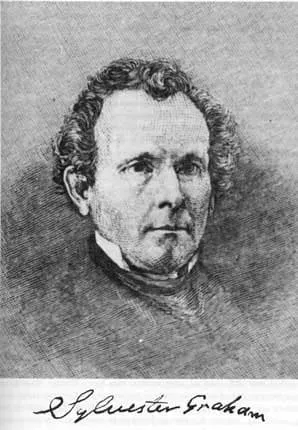 Photo: Sylvester Graham, via imgix.ranker.com
The three-meal structure wasn't just cultural preference. It was considered physiological necessity. Breakfast, dinner, and supper existed in part because doctors said so.
The Prescription That Flipped Everything
The reversal came gradually, and it came from the same medical establishment that had originally issued the warning.
By the late 19th and early 20th centuries, physicians began recommending small, frequent meals for patients with digestive conditions, nervous exhaustion, and what was then called "neurasthenia" — a catch-all diagnosis for people who seemed worn down by modern life. If a little food between meals helped calm an anxious stomach, then maybe the furnace theory was wrong.
Sanatoriums and health retreats began offering structured snack times as part of their treatment programs. The idea that eating could be therapeutic — that a small bite at an unusual hour might restore rather than damage — started seeping into mainstream thinking.
Then the factories got involved.
Industrial America and the Hunger Problem
The rise of factory work in the late 1800s created a practical problem that no physician's theory could ignore. Workers pulling 10- and 12-hour shifts couldn't function on three meals alone. Productivity dropped. Accidents increased. Factory owners, motivated less by compassion than by output, began allowing short breaks for workers to eat something.
The coffee break — and the snack that came with it — became institutionalized in American workplaces during the early 20th century. By the 1950s, it was a formal part of the American workday, endorsed by labor unions, celebrated in advertisements, and accepted as completely normal.
What the factory floor legitimized during the day, the living room extended into the night. As work schedules shifted and Americans began spending more time at home in the evenings, the gap between dinner and bedtime grew longer. People got hungry again. And increasingly, they did something about it.
The Light Bulb Changed When Hunger Was Allowed
This part of the story doesn't get enough credit: electric lighting fundamentally altered America's relationship with nighttime eating.
Before widespread electrification, most Americans went to bed when it got dark. Candles and oil lamps were expensive and limited. The evening meal happened early, and sleep followed not long after. There simply wasn't much of a window between dinner and unconsciousness.
Electricity changed that window into a room. By the 1920s and 1930s, Americans were staying up later — reading, listening to the radio, socializing — and their bodies were registering hunger at hours that would have been unthinkable a generation earlier. The midnight snack wasn't a moral failing anymore. It was just what happened when you were awake at midnight.
Advertisers noticed immediately.
How the Snack Industry Sold America on After-Dark Eating
World War II gave snacking its moral cover. Government nutrition campaigns encouraged Americans to eat more frequently to maintain energy and support the war effort. Eating between meals wasn't indulgent — it was patriotic. By the time the war ended, the cultural permission to snack had been fully granted.
 Photo: World War II, via static.vecteezy.com
Food companies moved fast. The postwar snack industry exploded through the 1950s and 1960s, with potato chips, crackers, cookies, and eventually an entire category of products specifically marketed for late-night consumption. Television made it easier — sitting on the couch watching late-night programming practically required something to eat.
By the time the 1970s and 1980s rolled around, the midnight snack had become a cultural shorthand for a specific kind of American experience: the quiet, slightly guilty pleasure of the kitchen after everyone else is asleep.
What the Refrigerator Glow Really Means
Here's what's interesting about the midnight snack in its current form: it's rarely about hunger anymore. Studies on late-night eating consistently show that people aren't raiding the kitchen because their bodies need fuel. They're doing it because they're stressed, or lonely, or winding down from a hard day, or simply because the kitchen is the one place in the house where they can be completely alone with their thoughts.
The midnight snack became a ritual. A private one. The specific combination of foods people reach for at midnight — the cold leftover pasta, the cereal eaten dry, the spoonful of peanut butter straight from the jar — tends to be deeply personal and almost never something they'd serve to guests.
Doctors invented it. Advertisers monetized it. But somewhere along the way, Americans made it their own — a quiet ceremony in a lit kitchen, built not around nutrition but around the particular comfort of being awake when the rest of the world isn't.