From Roman Remedy to Hot Dog Hero: The Unlikely Rise of America's Favorite Yellow Condiment

From Roman Remedy to Hot Dog Hero: The Unlikely Rise of America's Favorite Yellow Condiment
There's a good chance you've squeezed mustard onto something this week without giving it a second thought. It's just there — that bright yellow bottle, reliable as gravity, sitting next to the ketchup at every cookout, ballpark, and diner counter across America. But mustard has been quietly carrying one of food history's most surprising backstories, and almost nobody knows it.
This is a condiment that started in a Roman pharmacy, survived the Middle Ages in a monastery, crossed the Atlantic in a French immigrant's luggage, and then got its big American break at a World's Fair. Not bad for a seed.
The Ancient Doctor Who Started It All
Mustard's story begins not in a kitchen but in a medicine cabinet. The ancient Romans were obsessed with the stuff. Roman physicians prescribed mustard paste for everything from toothaches and snake bites to digestive trouble and joint pain. Hippocrates, the Greek physician often called the father of modern medicine, wrote about mustard's healing properties centuries before Rome even existed. It was considered a warming agent — something that drew blood to the surface of the skin and stimulated the body's internal systems.
 Photo: Hippocrates, via thumbs.dreamstime.com
Roman soldiers carried mustard seeds across Europe as they expanded their empire, and wherever they settled, the plant followed. They mixed the seeds with unfermented grape juice — called mustum in Latin — to create a paste they called mustum ardens, meaning "burning must." That phrase is almost certainly where the word "mustard" comes from.
So the next time someone says mustard is boring, remind them it once had a medical degree.
Monks, Monopolies, and Medieval France
After Rome's fall, mustard found a new home in European monasteries. Monks cultivated mustard plants in their gardens and sold the prepared condiment to fund their communities. By the Middle Ages, Dijon — a city in the Burgundy region of France — had become the undisputed capital of mustard production. The monks had done their work well.
French mustard makers eventually turned their craft into a serious commercial operation. By the 13th century, Dijon had formal guilds dedicated to mustard production, and the French crown was paying close attention. In 1634, the city was officially granted a royal monopoly on mustard making. Dijon mustard wasn't just a condiment — it was a regulated, government-backed industry.
This mattered enormously for what came next. When French Huguenots and other immigrants began crossing the Atlantic in the 17th and 18th centuries, they brought their culinary traditions with them, including a deep cultural attachment to prepared mustard. America had plenty of mustard seeds growing wild, but the French brought the idea that mustard was something worth perfecting.
The Man Who Bet on Yellow
For most of the 19th century, mustard in America was a relatively upscale product — something you might find in a well-stocked kitchen, usually brown or coarse-ground, with serious European pretensions. It wasn't mass-market. It wasn't cheap. And it definitely wasn't neon yellow.
That changed in 1904, when a New York spice company called R&T French introduced a new product at the Louisiana Purchase Exposition — better known as the St. Louis World's Fair. Their "cream salad mustard" was smooth, mild, and startlingly bright yellow, thanks to the addition of turmeric. It was designed to appeal to American tastes that found traditional mustard too sharp and too bitter.
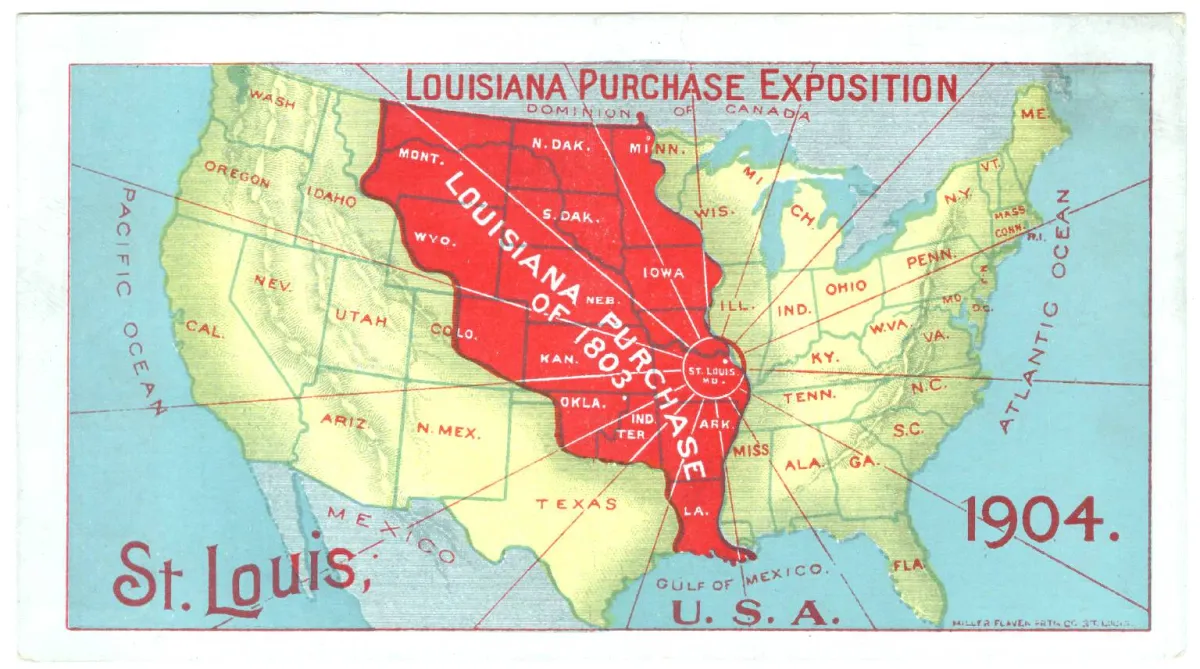 Photo: Louisiana Purchase Exposition, via 3.bp.blogspot.com
The World's Fair was the perfect launchpad. Millions of visitors passed through that summer, many of them encountering French's mustard for the first time on a hot dog — a pairing that would define American food culture for the next century. The combination was simple, affordable, and genuinely delicious. People went home and looked for it at their local grocery stores.
French's didn't just sell a condiment at that fair. They sold an idea: that mustard belonged in everyday American life, not just on fancy dinner tables.
The Ballpark Made It Permanent
If the World's Fair launched yellow mustard, baseball cemented it. By the early 20th century, hot dogs had become synonymous with American ballparks, and yellow mustard followed them into the stands. The bright color was practical — you could see exactly where you were squeezing — and the mild flavor worked for crowds that ranged from children to adults.
The partnership between mustard and baseball became so culturally embedded that it stopped being a marketing relationship and became something closer to tradition. Today, Americans consume roughly 400 million pounds of mustard every year, and a significant portion of that is still the same bright yellow variety that made its debut in St. Louis more than a century ago.
A Condiment That Outlived Its Own Story
What's fascinating about mustard is how completely it shed its original identity. Nobody squeezing a bottle at a tailgate party is thinking about Roman physicians or French royal monopolies. The healing paste that ancient doctors prescribed for joint pain is now just the thing you put on a bratwurst.
But that erasure is part of what makes mustard's story worth knowing. It traveled from ancient Mediterranean medicine to medieval monasteries to immigrant kitchens to a World's Fair in Missouri — and at every stop, it reinvented itself just enough to survive.
The plate may have changed completely. The seed never did.